
http://www.iol.co.za/index.php?set_id=1&click_id=588&art_id=qw1093769284459B216
Two French amateur archaelogists this week published a book in which they claim to have located the secret burial chamber of the Pharaoh Cheops in the Great Pyramid. On the face of this article the claim appears to be more than the usual hocum, and is based on the use of microgravimetry, which measures the density of materials, and radar technology. The theory has not been tested, due to being blocked (it is claimed by the article) by Egyptian authorities.
Monday, August 30, 2004


Sunday, August 29, 2004
Stolen 30th Dynasty relief returned to Egypt
http://weekly.ahram.org.eg/2004/705/eg3.htm
A 30th Dynasty granite relief has been returned to Egypt by Christie's auction house in New York. The relief was one part of a larger scene which had been removed from the temple of Behbeit Al-Hegara in the Delta governorate of Gharbiya. More information at the above link.
A 30th Dynasty granite relief has been returned to Egypt by Christie's auction house in New York. The relief was one part of a larger scene which had been removed from the temple of Behbeit Al-Hegara in the Delta governorate of Gharbiya. More information at the above link.
Saturday, August 28, 2004
Auguste Mariette - A Man with a Mission
http://weekly.ahram.org.eg/2004/705/he1.htm
An article about the French Egyptologist Auguste Mariette, who established the first Egyptian Museum and carried out many of the early excavations in Egypt. There is, in addition, a wonderful photograp of the main hall at the Bouleq (first Egyptian) museum, before it moved first to Giza and then to its present location at Tahrir Square, at http://weekly.ahram.org.eg/2004/705/he2.htm
An article about the French Egyptologist Auguste Mariette, who established the first Egyptian Museum and carried out many of the early excavations in Egypt. There is, in addition, a wonderful photograp of the main hall at the Bouleq (first Egyptian) museum, before it moved first to Giza and then to its present location at Tahrir Square, at http://weekly.ahram.org.eg/2004/705/he2.htm
Thursday, August 26, 2004
7th century BC tomb uncovered in Heliopolis
http://www.iol.co.za/index.php?set_id=1&click_id=588&art_id=qw1093437544702S000
Another waterlogged 26th Dynasty tomb has been found in the Heliopolis area of Cairo, accomapnied by over 400 "small statue figures". It was discovered during the construction of a house.
Another waterlogged 26th Dynasty tomb has been found in the Heliopolis area of Cairo, accomapnied by over 400 "small statue figures". It was discovered during the construction of a house.
Friday, August 20, 2004
The State of Coptic Studies
http://weekly.ahram.org.eg/2004/704/he1.htm
A fascinating article about the failure of founders and supporters of "Coptic studies" to find an agreed upon definition for Coptic studies as a discipline. It is an interesting insight into the nature of academia itself. This article summarises some of the issues that emerged form the International Association for Coptic Studies (eigth congress).
A fascinating article about the failure of founders and supporters of "Coptic studies" to find an agreed upon definition for Coptic studies as a discipline. It is an interesting insight into the nature of academia itself. This article summarises some of the issues that emerged form the International Association for Coptic Studies (eigth congress).
Wednesday, August 18, 2004
Moving Luxor homes from ancient sites
http://www.sis.gov.eg/online/html11/o160824r.htm
The Ministry of Tourism have announced that they are planning to move 150 houses currently on the path of the avenue of ram-headed sphinxes in Luxor, and will pay residents compensation for this. This is to enable archaeological excavations, after which the avenue will be extended between the Karnak and Luxor Temples The Ministry has also said that it would bear the costs for establishing 1,000 houses at Al-Taref Village, as a primary step for moving 4,000 families living on archaeological tombs on the western bank in Luxor.
Tuesday, August 17, 2004
Graeco-Roman Mosaics
http://weekly.ahram.org.eg/2004/703/eg9.htm
Three massive and very beautiful Roman mosaics from Tell Timai (Mansoura, Delta) have been restored and put on display in Alexandria in the Graeco-Roman Museum. There is an image of one of them and a description of all three at the above page on the Al Ahram website.
Three massive and very beautiful Roman mosaics from Tell Timai (Mansoura, Delta) have been restored and put on display in Alexandria in the Graeco-Roman Museum. There is an image of one of them and a description of all three at the above page on the Al Ahram website.
Saturday, August 14, 2004
Egypt turns attention to domestic suppliers of stolen treasure
http://www.concordmonitor.com/apps/pbcs.dll/article?AID=/20040813/REPOSITORY/408130379/1013/NEWS03
Article about the Egyptian problems with internal security in Egyptology. Zahi Hawass is talking int terms of tightening security, improving record keeping and launching programs aimed at convincing Egyptians that it's their job to protect their past. The article says that "When it comes to stealing Egypt's heritage, the potential payoff is so high and the chances of getting caught so low that even members of Egypt's elite are willing to risk their reputations and their liberty. " Under Egyptian law, antiquities smugglers can only be sentenced for to up to five years in prison. See the article for more information, with many quotes from Hawass.
Article about the Egyptian problems with internal security in Egyptology. Zahi Hawass is talking int terms of tightening security, improving record keeping and launching programs aimed at convincing Egyptians that it's their job to protect their past. The article says that "When it comes to stealing Egypt's heritage, the potential payoff is so high and the chances of getting caught so low that even members of Egypt's elite are willing to risk their reputations and their liberty. " Under Egyptian law, antiquities smugglers can only be sentenced for to up to five years in prison. See the article for more information, with many quotes from Hawass.
The largest seated statue of the 19th-Dynasty Pharaoh Ramses II so far
http://weekly.ahram.org.eg/2004/703/fr1.htm
"The remains of a colossal seated statue of Ramses II, thought to be about 13 metres tall and weighing 700 tons, have been discovered in a shanty area of the Upper Egyptian city of Akhmim, adjacent to the open-air museum. The lower part of the limestone statue is seated on a throne, to the right and left of which are figures of two of the pharaoh's daughters and princess- queens, Merit-Amun and Bint-Anath" (Al Ahram Weekly). For more information see the article, which goes into more details.
"The remains of a colossal seated statue of Ramses II, thought to be about 13 metres tall and weighing 700 tons, have been discovered in a shanty area of the Upper Egyptian city of Akhmim, adjacent to the open-air museum. The lower part of the limestone statue is seated on a throne, to the right and left of which are figures of two of the pharaoh's daughters and princess- queens, Merit-Amun and Bint-Anath" (Al Ahram Weekly). For more information see the article, which goes into more details.
New Predynastic tomb and other news
http://www.arabicnews.com/ansub/Daily/Day/040812/2004081225.html
A predynastic tomb has been found by the Belgian Mession at Wadi Hosh, Aswan, dating to around 4000BC (6000 years old). The remains of a womean aged between 40 and 50 years old were found. I have been unable to find any other information at present.
Other news items in the article include plans to introduce another robot into the Great Pyramid.
A predynastic tomb has been found by the Belgian Mession at Wadi Hosh, Aswan, dating to around 4000BC (6000 years old). The remains of a womean aged between 40 and 50 years old were found. I have been unable to find any other information at present.
Other news items in the article include plans to introduce another robot into the Great Pyramid.
Monday, August 09, 2004
Fraud exposed - after 3,000 years
http://news.bbc.co.uk/1/hi/world/middle_east/3539284.stm
Very unusually for the BBC, this is not a very well written article. However, the main content is that a researcher has published a paper about the looting of the tomb of King Sobekemsaf, during the New Kingdom era. The article says that the thieves were caught and tried in the Thebes, but that the senior officials who were found to be involved were let off and these details of the case was hushed up, while the robbers themselves were punished. For those of you with any Arabic, you may get more sense from the original article in the newspaper Al-Masri Al-Yaoum. The researcher is named in the BBC article as Ahmad Saleh.
Very unusually for the BBC, this is not a very well written article. However, the main content is that a researcher has published a paper about the looting of the tomb of King Sobekemsaf, during the New Kingdom era. The article says that the thieves were caught and tried in the Thebes, but that the senior officials who were found to be involved were let off and these details of the case was hushed up, while the robbers themselves were punished. For those of you with any Arabic, you may get more sense from the original article in the newspaper Al-Masri Al-Yaoum. The researcher is named in the BBC article as Ahmad Saleh.
Sunday, August 08, 2004
Update - Items missing from Cairo Museum
http://weekly.ahram.org.eg/2004/702/eg7.htm
A three-month search of the Egyptian Museum's basement, has confirmed that 36 gold bracelets and two gold rings dating back to the Roman Empire have, as previous reports suggested, disappeared. Their insurance value is LE150 million. Over the next week, prosecutors will interview former SCA secretary-general Gaballa Ali Gaballa, Zahi Hawass, the current SCA secretary- general, and former directors of the Egyptian Museum.
A three-month search of the Egyptian Museum's basement, has confirmed that 36 gold bracelets and two gold rings dating back to the Roman Empire have, as previous reports suggested, disappeared. Their insurance value is LE150 million. Over the next week, prosecutors will interview former SCA secretary-general Gaballa Ali Gaballa, Zahi Hawass, the current SCA secretary- general, and former directors of the Egyptian Museum.
26th Dynasty Horus Priest Surfaces
http://weekly.ahram.org.eg/2004/702/eg7.htm
WHILE laying the foundation stone of a new mosque in the Al-Basriya area of north-east Cairo's Ain Shams district,found a 26th dynasty tomb containing the skeleton of priest Ankh- Khonsu Deirt Hur, whose name means "the creation of the god Horus" in a large basalt sarcophagus accompanied by four canopic jars. The tomb, which has suffered water damage and is in poor condition, may have to be dismantled, restored and transferred to the open-air museum in Matariya, where a collection of 26th dynasty tombs is exhibited.
WHILE laying the foundation stone of a new mosque in the Al-Basriya area of north-east Cairo's Ain Shams district,found a 26th dynasty tomb containing the skeleton of priest Ankh- Khonsu Deirt Hur, whose name means "the creation of the god Horus" in a large basalt sarcophagus accompanied by four canopic jars. The tomb, which has suffered water damage and is in poor condition, may have to be dismantled, restored and transferred to the open-air museum in Matariya, where a collection of 26th dynasty tombs is exhibited.
Excavation findings at Deir Al-Bersha in Middle Egypt
http://weekly.ahram.org.eg/2004/702/he1.htm
A mission from the University of Leuven has been excavating at this site, and has found a multi-period occupation. "The mission is primarily concerned with an area that has been largely unexcavated, and which reveals continued use over successive dynasties. Willems made particular mention of the Old Kingdom cemeteries, and of the new evidence on First Intermediate Period rock tombs, Middle Kingdom tombs and mastabas -- about which nothing serious has ever been published -- and structures in the Second Intermediate Period -- in which usurped stone from earlier structures were used." Many more details and a map are at the All Ahram site above.
A mission from the University of Leuven has been excavating at this site, and has found a multi-period occupation. "The mission is primarily concerned with an area that has been largely unexcavated, and which reveals continued use over successive dynasties. Willems made particular mention of the Old Kingdom cemeteries, and of the new evidence on First Intermediate Period rock tombs, Middle Kingdom tombs and mastabas -- about which nothing serious has ever been published -- and structures in the Second Intermediate Period -- in which usurped stone from earlier structures were used." Many more details and a map are at the All Ahram site above.
Fit for a Pharaoh: 'fake' vase is 5,000 years old
http://news.independent.co.uk/uk/this_britain/story.jsp?story=548420
An unusual predynastic vase in Harrogate Museum, originally part of a private collection, which has long been thought to be a fake has been scientifically tested and found to be the real thing. The reason it was thought to be fake was because of the uncharacteristic nature of the decoration, but it has now been dated to around 5000 years old (just before the unification of Egypt under one king).
I would dearly love to go and have a look at it, but Harrogate is just a bit too far off the beaten track for one vase, although the rest of the collection does look excellent. A photo is currently being shown at: http://www.24hourmuseum.org.uk/nwh_gfx_en/ART23385.html
An unusual predynastic vase in Harrogate Museum, originally part of a private collection, which has long been thought to be a fake has been scientifically tested and found to be the real thing. The reason it was thought to be fake was because of the uncharacteristic nature of the decoration, but it has now been dated to around 5000 years old (just before the unification of Egypt under one king).
I would dearly love to go and have a look at it, but Harrogate is just a bit too far off the beaten track for one vase, although the rest of the collection does look excellent. A photo is currently being shown at: http://www.24hourmuseum.org.uk/nwh_gfx_en/ART23385.html
Tuesday, August 03, 2004
African Pastoral: Archaeologists Rewrite History of Farming
http://www.nytimes.com/2004/07/27/science/27farm.html
A good article discussing the latest theories about the origins of agriculture. Agriculture appears to have been adopted in an entirely different way in Africa, and recent and ongoing genetic studies suggest that cattle were domesticated in Africa thousands of years before plants, in a pattern quite unlike that adopted by Europe and Asia. Egypt is the joker in the pack - it had both cattle (probably African varieties) and Near Eastern domesticates, although it adopted agriculture several hundred years after the Near East, in spite of its relatively close proximity. Quoting many scholars and their research, this article describes some of the most recent ideas.
A good article discussing the latest theories about the origins of agriculture. Agriculture appears to have been adopted in an entirely different way in Africa, and recent and ongoing genetic studies suggest that cattle were domesticated in Africa thousands of years before plants, in a pattern quite unlike that adopted by Europe and Asia. Egypt is the joker in the pack - it had both cattle (probably African varieties) and Near Eastern domesticates, although it adopted agriculture several hundred years after the Near East, in spite of its relatively close proximity. Quoting many scholars and their research, this article describes some of the most recent ideas.
Monday, August 02, 2004
Huge statue of Ramses II found
http://www.news24.com/News24/Africa/News/0,,2-11-1447_1566462,00.html
Egyptian archaeologists recently discovered parts of what appears to be the biggest yet statue of Ramses II in the city of Akhmim
Egyptian archaeologists recently discovered parts of what appears to be the biggest yet statue of Ramses II in the city of Akhmim
Sunday, August 01, 2004
Builders Find Ancient Tomb in Cairo Suburb
http://www.reuters.com/newsArticle.jhtml?type=scienceNews&storyID=5836811
Builders laying the foundations for a mosque in northeast Cairo found a tomb dating from the Pharaonic period intact but submerged in ground water up to the ceiling of the tomb. The tomb dates to the New Kingdom and contains an unopened basalt sarcophagus, four Canopic jars, and inscriptions showing the tomb belonged to a man called Ankh Khansu Derat Hor.
At Akhmim in southern Egypt, while digging foundations for a religious school, workers found remains of a temple and pieces of a giant statue of the pharaoh Ramses II.
Builders laying the foundations for a mosque in northeast Cairo found a tomb dating from the Pharaonic period intact but submerged in ground water up to the ceiling of the tomb. The tomb dates to the New Kingdom and contains an unopened basalt sarcophagus, four Canopic jars, and inscriptions showing the tomb belonged to a man called Ankh Khansu Derat Hor.
At Akhmim in southern Egypt, while digging foundations for a religious school, workers found remains of a temple and pieces of a giant statue of the pharaoh Ramses II.
Wednesday, July 28, 2004
Countries battle over artefacts
http://news.bbc.co.uk/2/hi/entertainment/3927833.stm
A general article about countries trying to re-patriate artefacts and monuments now residing in other nations' museums. It deals with a number of artefacts and countries, but also mentions Egypt's attempts to re-patriate the Berlin bust of Nefertiti and the British Museum's Rosetta Stone.
A general article about countries trying to re-patriate artefacts and monuments now residing in other nations' museums. It deals with a number of artefacts and countries, but also mentions Egypt's attempts to re-patriate the Berlin bust of Nefertiti and the British Museum's Rosetta Stone.
Sunday, July 25, 2004
More about the BM's Analysis of Nesperennub
http://weekly.ahram.org.eg/2004/700/he1.htm
A detailed summary from Al Ahram Weekly about the BM's analysis of the Theban mummy Nesperennub. This is quite a long article and contains some interesting information both about the mummy and the exhbition itself. Be warned - the page takes quite a while to load, and the image on the page even longer.
A detailed summary from Al Ahram Weekly about the BM's analysis of the Theban mummy Nesperennub. This is quite a long article and contains some interesting information both about the mummy and the exhbition itself. Be warned - the page takes quite a while to load, and the image on the page even longer.
Friday, July 23, 2004
Recent Discoveries at Abydos
http://www.guardian.co.uk/guardianweekly/story/0,12674,1266978,00.html
This Guardian Online article summarises recent discoveries at Early Dynastic Abydos, including the probable human sacrifices and the 14 buried boats. It includes extensive comments by excavator David O'Connor. This is very much a popular-archaeology article, and is distinctly fluffy, but it does provide a useful top-level summary of what is being found there at the moment.
This Guardian Online article summarises recent discoveries at Early Dynastic Abydos, including the probable human sacrifices and the 14 buried boats. It includes extensive comments by excavator David O'Connor. This is very much a popular-archaeology article, and is distinctly fluffy, but it does provide a useful top-level summary of what is being found there at the moment.
Wednesday, July 21, 2004
Pollution forces Egypt to move statue of god-king
http://www.dailystar.com.lb/article.asp?edition_id=10&categ_id=4&Article_id=6446
The 80-ton pink granite statue of Ramesses II, originally from Memphis but currently located outside the Cairo Station, is covered in scaffolding in preparation for a move to a new location south of the city next year. It has suffered from pollution damage and is being examined for internal cracks prior to a logistical exercise that will cost around £1million UKP.
The 80-ton pink granite statue of Ramesses II, originally from Memphis but currently located outside the Cairo Station, is covered in scaffolding in preparation for a move to a new location south of the city next year. It has suffered from pollution damage and is being examined for internal cracks prior to a logistical exercise that will cost around £1million UKP.
Thursday, July 15, 2004
New twist on out-of-Africa theory
http://www.abc.net.au/science/news/stories/s1153697.htm
DNA analysis presented at a genetics conference that gives a new twist on the out-of-Africa hypothesis of human origins. U.S. researcher Professor Alan Templeton doesn't support the so-called replacement theory in which African hominids caused the extinction of other Homo species. Instead, he believes that his analysis of the human genome showed that prehistoric gene-swapping created a single evolutionary lineage beginning in Africa and ending where we are today.
DNA analysis presented at a genetics conference that gives a new twist on the out-of-Africa hypothesis of human origins. U.S. researcher Professor Alan Templeton doesn't support the so-called replacement theory in which African hominids caused the extinction of other Homo species. Instead, he believes that his analysis of the human genome showed that prehistoric gene-swapping created a single evolutionary lineage beginning in Africa and ending where we are today.
Wednesday, July 14, 2004
Professor Lech Krzyzaniak
http://www.muzarp.poznan.pl/muzeum/eindex.html
On the Poznan Museum Home Page: "It is with great sadness that we report the death
of Prof. Dr. Lech Krzyżaniak, a director of this Museum of long standing and an eminent researcher of the prehistory of North Eastern Africa, on July 10th, 2004." I never met Professor Krzyzaniak, but I have read nearly everything he wrote on the prehistory of Egypt, and I am truly sad to hear of his death. He will leave a great gap in Prehistoric studies. My sympathies to his friends, colleagues and family.
On the Poznan Museum Home Page: "It is with great sadness that we report the death
of Prof. Dr. Lech Krzyżaniak, a director of this Museum of long standing and an eminent researcher of the prehistory of North Eastern Africa, on July 10th, 2004." I never met Professor Krzyzaniak, but I have read nearly everything he wrote on the prehistory of Egypt, and I am truly sad to hear of his death. He will leave a great gap in Prehistoric studies. My sympathies to his friends, colleagues and family.
Friday, July 09, 2004
News Item: Ongoing work at Karnak and the Valley of the Kings
http://weekly.ahram.org.eg/2004/698/hr1.htm
An overview of the excavation, conservation and archaeological research project carried out this year by the Centre Franco-Egyptian d'Etude des Temples de Karnak (CFEETK), along with their Egyptian colleagues, in five different areas of Karnak temple.
Also, a description of the SCA's planned activities in the valley of the Kings: The SCA is undertaking a site management project with a Japanese Government grant of $2.6 million offered as a grant by the Japanese government.to provide a proper Visitor Centre, a new security system and stricter guidelines for tourists.
An overview of the excavation, conservation and archaeological research project carried out this year by the Centre Franco-Egyptian d'Etude des Temples de Karnak (CFEETK), along with their Egyptian colleagues, in five different areas of Karnak temple.
Also, a description of the SCA's planned activities in the valley of the Kings: The SCA is undertaking a site management project with a Japanese Government grant of $2.6 million offered as a grant by the Japanese government.to provide a proper Visitor Centre, a new security system and stricter guidelines for tourists.
Wednesday, July 07, 2004
Egyptian Antiquities Overview
http://www.egypttoday.com/arttemplate.asp?ArtID=50&IssueNo=07&IssueYear=04&MagID=ET
Egypt Today magazine article about the management of Egyptian antiquities and some of the recent negative publicity that it has received, together with information about progress with the Alexandria excavations and a musuems update.
Egypt Today magazine article about the management of Egyptian antiquities and some of the recent negative publicity that it has received, together with information about progress with the Alexandria excavations and a musuems update.
More on the British Museum 3-D Mummy Analysis (Discovery Channel)
http://dsc.discovery.com/news/briefs/20040628/mummy.html
Another article about the BM's virtual unwrapping of the mummy of Nesperennub
Another article about the BM's virtual unwrapping of the mummy of Nesperennub
Thursday, July 01, 2004
Battlements Found at Egypt's Ancient East Gateway
http://www.reuters.com/newsArticle.jhtml?type=scienceNews&storyID=5556237
"An Egyptian archaeological team has uncovered battlements from Pharaonic times at the ancient eastern gateway to Egypt in the north of the Sinai Peninsula, the Culture Ministry said Wednesday. The find includes three fortifications built in the area of Tharu, an ancient city which stood on a branch of the Nile that has long since dried up, a ministry statement said". (Reuters). See article for more.
"An Egyptian archaeological team has uncovered battlements from Pharaonic times at the ancient eastern gateway to Egypt in the north of the Sinai Peninsula, the Culture Ministry said Wednesday. The find includes three fortifications built in the area of Tharu, an ancient city which stood on a branch of the Nile that has long since dried up, a ministry statement said". (Reuters). See article for more.
Tuesday, June 29, 2004
More about the BM's Mummy Analysis
http://www.telegraph.co.uk/arts/main.jhtml?xml=/arts/2004/06/28/bamumm26.xml&sSheet=/arts/2004/06/28/ixartright.html
A longer and rather more colourful description of the British Museum's non-invasive examination of an 800BC mummy - this time from the Telegraph.
A longer and rather more colourful description of the British Museum's non-invasive examination of an 800BC mummy - this time from the Telegraph.
Mummy's mystery unravels in 3D
http://observer.guardian.co.uk/uk_news/story/0,6903,1248227,00.html
"In a technological and historical world first, this weekend the British Museum has unveiled or, more accurately, unwrapped the interior of a mummy that had remained sealed since it was made by masters of the ancient Egyptian craft of mummification. The startling operation was carried out without disturbing the intricate wrappings and amulets that were originally placed around his dead body. Using scanning technology developed by neurological researchers in a London hospital." (The Observer)
See full online article for more.
"In a technological and historical world first, this weekend the British Museum has unveiled or, more accurately, unwrapped the interior of a mummy that had remained sealed since it was made by masters of the ancient Egyptian craft of mummification. The startling operation was carried out without disturbing the intricate wrappings and amulets that were originally placed around his dead body. Using scanning technology developed by neurological researchers in a London hospital." (The Observer)
See full online article for more.
Monday, June 28, 2004
Egypt steps up calls on Germany to return Nefertiti bust
http://story.news.yahoo.com/news?tmpl=story&cid=1514&ncid=732&e=4&u=/afp/20040627/wl_mideast_afp/afplifestyle_germany
Cairo Museum are requesting the return of the famous Nefertiti bust for a several month exhibition.
Cairo Museum are requesting the return of the famous Nefertiti bust for a several month exhibition.
Sunday, June 27, 2004
Trouble in the basement of the Cairo Museum
http://weekly.ahram.org.eg/2004/696/eg9.htm
The museum has a massive collection on display, and the additional collection is stored in the basement. "But that too is crammed to the brim. Objects there are stored so haphazardly that many cannot be located, and some may even have gone missing. It has been reported that an important relief has been mislaid and 38 gold bracelets and rings have disappeared. This mayhem in the basement has pushed the Ministry of Culture to launch an ambitious three-year plan to protect the legendary storehouse" (Al Ahram Weekly).
The museum has a massive collection on display, and the additional collection is stored in the basement. "But that too is crammed to the brim. Objects there are stored so haphazardly that many cannot be located, and some may even have gone missing. It has been reported that an important relief has been mislaid and 38 gold bracelets and rings have disappeared. This mayhem in the basement has pushed the Ministry of Culture to launch an ambitious three-year plan to protect the legendary storehouse" (Al Ahram Weekly).
Wednesday, June 23, 2004
Mummy of a child and other items stolen from ancient tomb
http://www.timesleader.com/mld/timesleader/8985729.htm
"A mummy more than 3,000 years old and other items have been stolen from a Pharaonic tomb near this southern Egyptian city....The missing objects were taken from the tomb of a nobleman who lived in the time of Pharaoh Akhenaton, who ruled in 1379-1362 B.C., said Sabri Abdel Aziz of Egypt's antiquity department." (www.timesleader.com)
"A mummy more than 3,000 years old and other items have been stolen from a Pharaonic tomb near this southern Egyptian city....The missing objects were taken from the tomb of a nobleman who lived in the time of Pharaoh Akhenaton, who ruled in 1379-1362 B.C., said Sabri Abdel Aziz of Egypt's antiquity department." (www.timesleader.com)
Sunday, June 20, 2004
Mummy wrappings giving up new texts
http://seattlepi.nwsource.com/national/178611_mummies19.html
After being wrapped, Late Dynastic mummies were encased in "papyrus-mache" - coverings made of recycled papyrus texts. The University of California-Berkeley has a collection of these which is the least mined of these resources to date, and these are now being explored.
After being wrapped, Late Dynastic mummies were encased in "papyrus-mache" - coverings made of recycled papyrus texts. The University of California-Berkeley has a collection of these which is the least mined of these resources to date, and these are now being explored.
Saturday, June 19, 2004
National Museum of Egyptian Civilisation's first phase is nearing completion
http://weekly.ahram.org.eg/2004/695/eg11.htm
"Journalists and photographers gathered at the elegant Ministry of Culture edifice last Tuesday to witness the official nod to the long-awaited National Museum of Egyptian Civilisation, planned to display the span of Egypt's various civilisations. Built at the edge of Lake Ain Al-Sira on the site of the mediaeval city of Fustat, the ambitious museum will put on show Egypt's diverse civilisations from pre-historic to modern times. On display will be 150,000 artefacts carefully selected from museums and storehouses throughout Egypt" (Al Ahram Weekly).
"Journalists and photographers gathered at the elegant Ministry of Culture edifice last Tuesday to witness the official nod to the long-awaited National Museum of Egyptian Civilisation, planned to display the span of Egypt's various civilisations. Built at the edge of Lake Ain Al-Sira on the site of the mediaeval city of Fustat, the ambitious museum will put on show Egypt's diverse civilisations from pre-historic to modern times. On display will be 150,000 artefacts carefully selected from museums and storehouses throughout Egypt" (Al Ahram Weekly).
Donkeys originated in Africa?
http://www.abc.net.au/science/news/stories/s1134709.htm
"Researchers used an increasingly popular method called a genetic clock, in which genetic mutations can be calculated for each generation, and then generations of two separate species can be counted back to a theoretical common ancestor".
"African wild asses were probably tamed not once, but twice, in locations far apart to become the willing donkeys that carry loads the world over, an international team of researchers says." In Egypt the earliest donkey remains date back to the early Neolithic of Lower Egypt.
"Researchers used an increasingly popular method called a genetic clock, in which genetic mutations can be calculated for each generation, and then generations of two separate species can be counted back to a theoretical common ancestor".
"African wild asses were probably tamed not once, but twice, in locations far apart to become the willing donkeys that carry loads the world over, an international team of researchers says." In Egypt the earliest donkey remains date back to the early Neolithic of Lower Egypt.
Thursday, June 17, 2004
More on the Helwan Excavations - with Photos
http://www.abc.net.au/science/news/stories/s1133289.htm
This article gives information about what archaeologists are learning about a cross section of society and the people who were buried at the site. A good, informative piece.
This article gives information about what archaeologists are learning about a cross section of society and the people who were buried at the site. A good, informative piece.
Tuesday, June 15, 2004
Security and Tourism in Egypt - an American perspective
http://www.projo.com/travel/content/projo_20040613_egypt.1a9b01.html
N.B. - you have to register with this site, and it will ask you for an email address and password when you revisit. It is an article about an American visiting Egypt, the security precautions in place and the absence of Americans. The article is a mixture of anecdotal accounts of the writer's visit to Egypt and some contemplation about why, in her opinion, Americans have ceased to visit.
N.B. - you have to register with this site, and it will ask you for an email address and password when you revisit. It is an article about an American visiting Egypt, the security precautions in place and the absence of Americans. The article is a mixture of anecdotal accounts of the writer's visit to Egypt and some contemplation about why, in her opinion, Americans have ceased to visit.
Monday, June 14, 2004
More on Helwan
http://www.smh.com.au/articles/2004/06/14/1087065082870.html?oneclick=true
More information about the Australian Mission's discovery of new tombs at Helwan
More information about the Australian Mission's discovery of new tombs at Helwan
Sunday, June 13, 2004
Twenty 5000 Year Old Tombs found at Helwan
http://www.theaustralian.news.com.au/common/story_page/0,5744,9837177%255E1702,00.html
Dr Christiana Kohler's Australian Mission has found a necropolis at Helwan containing a relief showing early hieroglyphic text and 20 tombs. The necropolis also has two early Old Kingdom tombs.
Earlier informative articles regarding Kohler's work at Helwan include:
http://www.pr.mq.edu.au/macnews/showitem.asp?ItemID=87
http://www.pr.mq.edu.au/events/archive.asp?ItemID=38
http://weekly.ahram.org.eg/2000/489/tr1.htm
Dr Christiana Kohler's Australian Mission has found a necropolis at Helwan containing a relief showing early hieroglyphic text and 20 tombs. The necropolis also has two early Old Kingdom tombs.
Earlier informative articles regarding Kohler's work at Helwan include:
http://www.pr.mq.edu.au/macnews/showitem.asp?ItemID=87
http://www.pr.mq.edu.au/events/archive.asp?ItemID=38
http://weekly.ahram.org.eg/2000/489/tr1.htm
Friday, June 11, 2004
About Seti I - whose Mortuary Temple has been restored and re-Opened
http://weekly.ahram.org.eg/2004/694/he1.htm
The Mortuary Temple of Seti I has been restored and re-opened. This article describes Seti I and his role in Egypt's history, putting his mortuary temple into context. It touches on Seti's son Ramesses II and discusses the possibility that the Ramesseum was originally built for Seti rather than his son.
The Mortuary Temple of Seti I has been restored and re-opened. This article describes Seti I and his role in Egypt's history, putting his mortuary temple into context. It touches on Seti's son Ramesses II and discusses the possibility that the Ramesseum was originally built for Seti rather than his son.
Thursday, June 10, 2004
More Underwater finds in Alexandria
http://www.arabicnews.com/ansub/Daily/Day/040603/2004060321.html
More Ptolemaic finds have been located including more blocks of the famous lighthouse, more pieces of the rose granite statue of Isis, and a stela describing a Ptolomaic tax law.
More Ptolemaic finds have been located including more blocks of the famous lighthouse, more pieces of the rose granite statue of Isis, and a stela describing a Ptolomaic tax law.
Monday, June 07, 2004
Egypt to Catalogue Artifacts in Neglected Basement
http://www.reuters.co.uk/newsArticle.jhtml?type=scienceNews&storyID=5353976§ion=news
"CAIRO (Reuters) - Egypt is about to begin the painstaking five-year task of cataloguing and restoring some 90,000 pharaonic and other artifacts which have lain almost forgotten for decades since they were dug from ancient ruins"
"CAIRO (Reuters) - Egypt is about to begin the painstaking five-year task of cataloguing and restoring some 90,000 pharaonic and other artifacts which have lain almost forgotten for decades since they were dug from ancient ruins"
Sunday, June 06, 2004
Items Missing from the Cairo Museum
http://www.iol.co.za/index.php?click_id=588&art_id=qw1086530580398B221&set_id=1
A number of items in the Cairo Museum cannot be accounted for, and an audit is going to be carried out to discover the full extent of the loss. It is alledged that 38 gold items from the Tutankhamun collection are missing, and it has been confirmed that another 38 pieces, dating to the Roman occupation of Egypt, are also missing.
A number of items in the Cairo Museum cannot be accounted for, and an audit is going to be carried out to discover the full extent of the loss. It is alledged that 38 gold items from the Tutankhamun collection are missing, and it has been confirmed that another 38 pieces, dating to the Roman occupation of Egypt, are also missing.
Friday, June 04, 2004
2003-2004 Season at Abusir - Excavation Overview
http://egyptologie.ff.cuni.cz/Report_Abusir_2003_2004.pdf
This PDF file provides a 10-page overview of the Czech excavations at Abusir in the 2003-2004 season. The paper includes plans and photographs. The description of the excavations is short but fascinating, and a real insight into the Czech activities at Abusir.
This PDF file provides a 10-page overview of the Czech excavations at Abusir in the 2003-2004 season. The paper includes plans and photographs. The description of the excavations is short but fascinating, and a real insight into the Czech activities at Abusir.
Thursday, June 03, 2004
Egyptomania in Dubai
http://weekly.ahram.org.eg/2004/693/he2.htm
Zahi Hawass discusses the evidence of Egiptomania in the culture of Dubai.
Zahi Hawass discusses the evidence of Egiptomania in the culture of Dubai.
Origins of Africa's Cattle
http://www.africagenome.co.za/publications/scientist.html
http://www.africagenome.co.za/publications/African_Scientist_1_entire.pdf
The first issue of "The African Scientist - Bringing Genomes Alive". It dates to January of this year, but I've only just found it. It has a two page article entitled "Where do Africa's cattle come from?" which is an important topic for prehistoric/predynastic studies and the origins of Egyptian domestication and agriculture.
http://www.africagenome.co.za/publications/African_Scientist_1_entire.pdf
The first issue of "The African Scientist - Bringing Genomes Alive". It dates to January of this year, but I've only just found it. It has a two page article entitled "Where do Africa's cattle come from?" which is an important topic for prehistoric/predynastic studies and the origins of Egyptian domestication and agriculture.
Ancient Egyptian Sense of Humour
http://dsc.discovery.com/news/briefs/20040531/egypthumor.html
"A recent series of lectures on ancient Egyptian humor given by a leading historian reveals that people thousands of years ago enjoyed bawdy jokes, political satire, parodies and cartoon-like art." (Discovery Channel Website)
"A recent series of lectures on ancient Egyptian humor given by a leading historian reveals that people thousands of years ago enjoyed bawdy jokes, political satire, parodies and cartoon-like art." (Discovery Channel Website)
The Nobleman - New Exhibit at Boston MFA
http://www.bostonmagazine.com/ArticleDisplay.php?id=375
Boston's Museum of Fine Art has acquired a remarkable piece of statuary known as "The Nobleman" for its collections, and it is now on display. Showing a man's head, it is thought to date to the reign of Senusret III. It has belonged for many years to the Josephson private collection, and this detailed page describes both the sculpture and the way in which it was acquired and kept by Josephson. I haven't so far found a picture of it online, and the MFA website is out of date on the news front, but I'll update as and when I find one.
Boston's Museum of Fine Art has acquired a remarkable piece of statuary known as "The Nobleman" for its collections, and it is now on display. Showing a man's head, it is thought to date to the reign of Senusret III. It has belonged for many years to the Josephson private collection, and this detailed page describes both the sculpture and the way in which it was acquired and kept by Josephson. I haven't so far found a picture of it online, and the MFA website is out of date on the news front, but I'll update as and when I find one.
Wednesday, June 02, 2004
Electronic Egyptology Forum Online Library - Updated
http://www.egiptomania.com/EEF/EEFLibrary.html
There are five articles in the EEF Library, and a new one has been added by William McMurray entitled "Towards an Absolute Chronology for Ancient Egypt". McMurray invites comments via the EEF forum.
There are five articles in the EEF Library, and a new one has been added by William McMurray entitled "Towards an Absolute Chronology for Ancient Egypt". McMurray invites comments via the EEF forum.
Monday, May 31, 2004
New archaelogical findings may re-shape Sudanese history
http://www.angolapress-angop.ao/noticia-e.asp?ID=248239
The recent discovery of seven statues in Karma, northern Sudan, south of the Third Cataract, which represented monarchs during the ancient Nubian Kingdom. They represent the kings Taharqa, Tanoutamon, Senkamanisken, Anlamani and Aspelta.
The recent discovery of seven statues in Karma, northern Sudan, south of the Third Cataract, which represented monarchs during the ancient Nubian Kingdom. They represent the kings Taharqa, Tanoutamon, Senkamanisken, Anlamani and Aspelta.
Friday, May 28, 2004
More on the Alexandrian University
http://story.news.yahoo.com/news?tmpl=story&cid=624&ncid=753&e=10&u=/ap/20040526/ap_on_sc/egypt_ancient_university
A short update about the results of the Polish team who are excavating the legendary University at Alexandria
A short update about the results of the Polish team who are excavating the legendary University at Alexandria
Tuesday, May 25, 2004
Interactive Hierakonpolis - Updated
http://www.archaeology.org/interactive/hierakonpolis/field/2004f.html
The excellent account of the latest excavations from Hierakonpolis has been updated at the Archaeology Magazine website. This issue focuses on the contents of Tomb 9, a Nubian C-Group burial, including an analysis of the tomb's owner herself.
The excellent account of the latest excavations from Hierakonpolis has been updated at the Archaeology Magazine website. This issue focuses on the contents of Tomb 9, a Nubian C-Group burial, including an analysis of the tomb's owner herself.
Sunday, May 23, 2004
Mataria Obelisk To Be Restored
http://www.uk.sis.gov.eg/online/html11/o200524z.htm
The obelisk, currently located in a suburb of Cairo called Mataria, was erected by the 12th Dynasty Pharaoh Senusret I. It is 20.4 meters high and weighs 121 tons. It has been decided to subject it to mechanical cleaning.
The obelisk, currently located in a suburb of Cairo called Mataria, was erected by the 12th Dynasty Pharaoh Senusret I. It is 20.4 meters high and weighs 121 tons. It has been decided to subject it to mechanical cleaning.
Saturday, May 22, 2004
Nubian Monuments in the Past and Present
http://weekly.ahram.org.eg/2004/691/heritage.htm
When Lake Nasser was created, many Nubian monuments were rescued. Others were lost beneath the waters created by the new Aswan Dam. This Al Ahram Weekly article discusses both the prehistory and history of Nubia, and the work done to preserve its heritage.
When Lake Nasser was created, many Nubian monuments were rescued. Others were lost beneath the waters created by the new Aswan Dam. This Al Ahram Weekly article discusses both the prehistory and history of Nubia, and the work done to preserve its heritage.
Unearthing Egypt's Treasures
http://www.projo.com/books/content/projo_20040513_egypt13.1d6998.html
A Providence Journal article about the attitidues of Zahi Hawass to visitors to Egypt.
If you need a username and password, use Andie (username) and Gazelle (password).
A Providence Journal article about the attitidues of Zahi Hawass to visitors to Egypt.
If you need a username and password, use Andie (username) and Gazelle (password).
Thursday, May 20, 2004
Rescuing the Temple of Esna
http://www.uk.sis.gov.eg/online/html11/o200524m.htm
An Egyptian State Information Service item about the planned restoration of Esna temple. The threat comes from a combination of high underground water and the low level of the Nile water in front of the temple caused by the Esna barrages, and sewage from local housing. This is a major project which involves dismantling the temple and raising it on higher ground.
An Egyptian State Information Service item about the planned restoration of Esna temple. The threat comes from a combination of high underground water and the low level of the Nile water in front of the temple caused by the Esna barrages, and sewage from local housing. This is a major project which involves dismantling the temple and raising it on higher ground.
More about the Saqqara Mummies
http://news.nationalgeographic.com/news/2004/05/0519_040519_egyptmummies.html
The National Geographic have offered a short summary of what is known about the recently discovered Saqqara mummies. The article also discusses Zahi Hawass and his policies re recovering lost/stolen/smuggled artefacts.
The National Geographic have offered a short summary of what is known about the recently discovered Saqqara mummies. The article also discusses Zahi Hawass and his policies re recovering lost/stolen/smuggled artefacts.
Wednesday, May 19, 2004
50th Anniversary of Finding of Khufu's Solar Barque Commemorated
http://www.uk.sis.gov.eg/online/html11/o130524a.htm
The Egyptian State Information Service is to commemorate the finding of the Solar Barque: "Commemorating the 50th anniversary of their discovery, the Supreme Council for Antiquities(SCA) is to hold a series of lectures to highlight the historic and archaeological significance of the boats and their religious implications in the ancient Egyptian doctrine."
The Egyptian State Information Service is to commemorate the finding of the Solar Barque: "Commemorating the 50th anniversary of their discovery, the Supreme Council for Antiquities(SCA) is to hold a series of lectures to highlight the historic and archaeological significance of the boats and their religious implications in the ancient Egyptian doctrine."
Mubarak Opens Luxor Museum Extension
http://www.uk.sis.gov.eg/online/html11/o190524x.htm
President Mubarak opened the extension to the Luxor Museum, which, kown as the Thebes Glory Hall, examines the military history of Ancient Egypt.
Please note - there is also a considerable amount of commentary quoted about political matters.
President Mubarak opened the extension to the Luxor Museum, which, kown as the Thebes Glory Hall, examines the military history of Ancient Egypt.
Please note - there is also a considerable amount of commentary quoted about political matters.
Monday, May 17, 2004
Pyramid Workers's Village - Continued
http://weekly.ahram.org.eg/2004/690/he2.htm
Zahi Hawass's regular article in Al Ahram Weekly continues his description of different aspects of the Pyramid Workers's village at Giza. This week he looks at the number of people employed, how they were managed, and what they ate.
Zahi Hawass's regular article in Al Ahram Weekly continues his description of different aspects of the Pyramid Workers's village at Giza. This week he looks at the number of people employed, how they were managed, and what they ate.
A boat chapel in the temple of Hathor at Dendera
http://weekly.ahram.org.eg/2004/690/he1.htm
A report about a boat chapel found at Dendera earlier this year, discussed in the context of the Dendera site.
A report about a boat chapel found at Dendera earlier this year, discussed in the context of the Dendera site.
Saturday, May 15, 2004
Saqqara Mummies
http://www.uk.sis.gov.eg/online/html11/o140524i.htm
Two more Ptolemaic mummies found in Saqqara
Two more Ptolemaic mummies found in Saqqara
Friday, May 14, 2004
Rescuing the Osirion tomb at Abydos
http://www.uk.sis.gov.eg/online/html11/o130524.htm
The Egyptian State Information Service report that the Osirion tomb is under serious threat from groundwater and salt damage, following the findings of a Swiss research team. However, it has not yet been decided how to counteract the problem.
The Egyptian State Information Service report that the Osirion tomb is under serious threat from groundwater and salt damage, following the findings of a Swiss research team. However, it has not yet been decided how to counteract the problem.
Thursday, May 13, 2004
Restoration of Kom Ombo
http://www.uk.sis.gov.eg/online/html11/o130524c.htm
The Ptolomaic site of Kom Ombo has been the subject of an extensive restoration project, which is described in brief in this Egyptian State Information Service feature.
The Ptolomaic site of Kom Ombo has been the subject of an extensive restoration project, which is described in brief in this Egyptian State Information Service feature.
Hardy tourism industry boosts Egypt economy
http://www.cnn.com/2004/TRAVEL/05/12/bi.economy.egypt.tourism.reut/
An article about Egypt's thriving tourist industry. It puts the tourist industry into its political and economic context.
An article about Egypt's thriving tourist industry. It puts the tourist industry into its political and economic context.
Monday, May 10, 2004
Facility for Archaeological Research at Helwan (FARAH)
http://www.pr.mq.edu.au/macnews/showitem.asp?ItemID=278
This page describes Australia’s first permanent archaeological research facility established in Egypt, and gives an overview of their activities at Helwan - which is helping to clarify the situation from the First to Fourth dynasties, a period of some 400 years. The research is helping to establish how the Egyptian Civilization evolved from Predynastic times through to the pyramid building ages and beyond.
This page describes Australia’s first permanent archaeological research facility established in Egypt, and gives an overview of their activities at Helwan - which is helping to clarify the situation from the First to Fourth dynasties, a period of some 400 years. The research is helping to establish how the Egyptian Civilization evolved from Predynastic times through to the pyramid building ages and beyond.
Sunday, May 09, 2004
Insects at Amarna
http://www.geotimes.org/may04/NN_plague.html
A study of insect life at Akehnaten's city Amarna (Akhetaten) has revealed that the place was teaming with fleas, flies, bedbugs and parasites, in particular at the tombuilders "Workmens Village". The study by Eva Panagiotakopulu, a paleoentomologist at Sheffield University (UK) believes that the fossilized plague bacteria she identified in the fossilized fleas may indicate that the plague originated in Africa, in fleas that fed on the Nile rat and were only later transferred to Asian rats as carriers, which in turn communicated the plague to the rest of the Mediterranean.
A study of insect life at Akehnaten's city Amarna (Akhetaten) has revealed that the place was teaming with fleas, flies, bedbugs and parasites, in particular at the tombuilders "Workmens Village". The study by Eva Panagiotakopulu, a paleoentomologist at Sheffield University (UK) believes that the fossilized plague bacteria she identified in the fossilized fleas may indicate that the plague originated in Africa, in fleas that fed on the Nile rat and were only later transferred to Asian rats as carriers, which in turn communicated the plague to the rest of the Mediterranean.
Saturday, May 08, 2004
Ancient University of Alexandria Found
http://www.sltrib.com/2004/May/05092004/nation_w/164862.asp
A Polish-Egyptian team has found the remains of the University of Alexandria. It has been found in a part of modern Alexandria where a theatre had already been identified, now thought to be part of the library complex. 13 large auditoria have been found. The University was legendary and texts describe it, but this is the first time that any part of the library has been discovered. Amongst many renowned scholars who worked there were Euclid and Archimedes.
A Polish-Egyptian team has found the remains of the University of Alexandria. It has been found in a part of modern Alexandria where a theatre had already been identified, now thought to be part of the library complex. 13 large auditoria have been found. The University was legendary and texts describe it, but this is the first time that any part of the library has been discovered. Amongst many renowned scholars who worked there were Euclid and Archimedes.
Wednesday, May 05, 2004
Pharaonic gold miners' housing compound discovered near Red Sea
http://story.news.yahoo.com/news?tmpl=story&cid=1540&ncid=1540&e=1&u=/afp/20040504/sc_afp/egypt_antiquities_040504192007
"A Belgian archaeological mission to Egypt discovered a Pharaonic housing compound close to a gold mine in mountains along the Red Sea. . . . Mineshafts and holes, with huts for laborers spread around them, were uncovered, in addition to a huge number of stone instruments used to cut the gold-bearing rocks."
"A Belgian archaeological mission to Egypt discovered a Pharaonic housing compound close to a gold mine in mountains along the Red Sea. . . . Mineshafts and holes, with huts for laborers spread around them, were uncovered, in addition to a huge number of stone instruments used to cut the gold-bearing rocks."
Monday, May 03, 2004
Recent Discoveries at Oxirhynchus Described (Spanish)
http://www.egiptologia.net/isis/epm-02.html
Since 1992 the site has been under the investigation of the University of Barcelona. There are three parts to the Oxyrhynchus’s site under investigation: a painted Christian chapel, a Coptic-Saite Necropolis and an
underground structure dedicated to Osiris.
Since 1992 the site has been under the investigation of the University of Barcelona. There are three parts to the Oxyrhynchus’s site under investigation: a painted Christian chapel, a Coptic-Saite Necropolis and an
underground structure dedicated to Osiris.
Czech Egyptology - Parts II and III
http://www.radio.cz/en/article/49372
http://www.radio.cz/en/article/49629
The last two parts of Czech Radio's look at the role of Czech Egyptologists in Egypt, at sites like Abusir. Part II stresses the role of building up good relationships with local people and the SCA, whilst part III looks at the site of Abusir itself and what has been found there. Both are very short articles. The link for Part 1 is contained earlier in this blog,
http://www.radio.cz/en/article/49629
The last two parts of Czech Radio's look at the role of Czech Egyptologists in Egypt, at sites like Abusir. Part II stresses the role of building up good relationships with local people and the SCA, whilst part III looks at the site of Abusir itself and what has been found there. Both are very short articles. The link for Part 1 is contained earlier in this blog,
More on the New Kingdom forts in Sinai
http://weekly.ahram.org.eg/2004/688/eg10.htm
"The site includes two limestone forts, one dating from the reign of the XVIIIth-Dynasty Pharaoh Thutmosis III (1475-1425) and the second from the XIXth Dynasty . . . the only remaining part of the first fort was found on the east bank of the Al- Salam Canal. It consists of a moat built on a foundation of between nine and 14 layers of fired red bricks, a material that was only rarely used during the New Kingdom. Only 50 per cent of the second fort has been uncovered" (from Al Ahram weekly)
"The site includes two limestone forts, one dating from the reign of the XVIIIth-Dynasty Pharaoh Thutmosis III (1475-1425) and the second from the XIXth Dynasty . . . the only remaining part of the first fort was found on the east bank of the Al- Salam Canal. It consists of a moat built on a foundation of between nine and 14 layers of fired red bricks, a material that was only rarely used during the New Kingdom. Only 50 per cent of the second fort has been uncovered" (from Al Ahram weekly)
Geological Development of the Nile
http://weekly.ahram.org.eg/2004/688/eg2.htm
Rushdi Said is something of a personal hero of mine - a geologist who has spent a considerable amount of time writing about the Nile's development since its first creation. This knowledge is central to an understanding of prehistoric contexts and how the behaviour of the river at different times influenced daily life in historical Egypt. This Al Ahram weekly article is an interview with Rushdi Said, and offers a summarised description of the Nile's development.
Rushdi Said is something of a personal hero of mine - a geologist who has spent a considerable amount of time writing about the Nile's development since its first creation. This knowledge is central to an understanding of prehistoric contexts and how the behaviour of the river at different times influenced daily life in historical Egypt. This Al Ahram weekly article is an interview with Rushdi Said, and offers a summarised description of the Nile's development.
Egypt Tourism Hits Record Figures
http://www.uk.sis.gov.eg/online/html11/o280424m.htm
The Egyptian State Information Service has announced that Egyptian tourism has reached record figures. If true, this must be a huge boost after the terrorst strikes against Egypt in the 90s, when some writers speculated that Egypt's tourism would be permanently damaged.
The Egyptian State Information Service has announced that Egyptian tourism has reached record figures. If true, this must be a huge boost after the terrorst strikes against Egypt in the 90s, when some writers speculated that Egypt's tourism would be permanently damaged.
Saturday, May 01, 2004
Egyptian Antiquity Thief Gets 35 Years
http://english.aljazeera.net/NR/exeres/555965B6-B4C7-4CF2-84E3-2E047896A301.htm
"The ringleader of an Egyptian antiquities smuggling ring that shipped at least 300 pharaonic and other artefacts to Europe has been sentenced to 35 years in prison." From Aljazeera.net
"The ringleader of an Egyptian antiquities smuggling ring that shipped at least 300 pharaonic and other artefacts to Europe has been sentenced to 35 years in prison." From Aljazeera.net
Tuesday, April 27, 2004
More on the Saqqara Mummies - over 50 of them
http://www.iol.co.za/index.php?click_id=31&art_id=qw1082999521852B221&set_id=1
http://msnbc.msn.com/id/4837894/
http://www.newscientist.com/news/news.jsp?id=ns99994926
Egyptians had used the network of shafts and corridors over several centuries, starting from the 26th dynasty (664-525 B.C.) and continuing into the Ptolemaic period, which ended with the death of Cleopatra in 30 BC (from the MSN website).
http://msnbc.msn.com/id/4837894/
http://www.newscientist.com/news/news.jsp?id=ns99994926
Egyptians had used the network of shafts and corridors over several centuries, starting from the 26th dynasty (664-525 B.C.) and continuing into the Ptolemaic period, which ended with the death of Cleopatra in 30 BC (from the MSN website).
Monday, April 26, 2004
Two 18th Dynasty fortresses discovered in northern Sinai
http://www.uk.sis.gov.eg/online/html11/o250424o.htm
The Egyptian-American mission operating in Tal al-Borg area in north Sinai discovered remains of two fortresses from the Pharaonic l8th dynasty. This is a very short article from the Egyptian State Information Service.
The Egyptian-American mission operating in Tal al-Borg area in north Sinai discovered remains of two fortresses from the Pharaonic l8th dynasty. This is a very short article from the Egyptian State Information Service.
New Online Exhibition re Ancient Egyptian Cereals
http://museum.agropolis.fr/pages/expos/egypte/index.htm
Currently only in French, but shortly to be published in English as well, this site is about Egyptian cereals in general. Different sections look at the basics of cereals in ancient Egypt, bread making (ancient and contemporary), and the use of cereals in different contexts. A fascinating site, even with my abysmal French - I can't wait for the English language version to arrive!
There is also a link on the site to the English language website of the Dokki agricultural museum in Giza, Cairo, which is well worth a visit in its own right: (http://museum.agropolis.fr/pages/expos/egypte/fr/museum_cairo/index.htm).
Currently only in French, but shortly to be published in English as well, this site is about Egyptian cereals in general. Different sections look at the basics of cereals in ancient Egypt, bread making (ancient and contemporary), and the use of cereals in different contexts. A fascinating site, even with my abysmal French - I can't wait for the English language version to arrive!
There is also a link on the site to the English language website of the Dokki agricultural museum in Giza, Cairo, which is well worth a visit in its own right: (http://museum.agropolis.fr/pages/expos/egypte/fr/museum_cairo/index.htm).
New Mummies found in Egypt
http://www.washtimes.com/upi-breaking/20040425-123225-6753r.htm
Egypt said Sunday new mummies in wooden coffins dating back to the 7th Century B.C. have been unearthed at the Giza Pyramids near Cairo.
Egypt said Sunday new mummies in wooden coffins dating back to the 7th Century B.C. have been unearthed at the Giza Pyramids near Cairo.
Sunday, April 25, 2004
Dig days: The Pyramid builders II (Zahi Hawass)
http://weekly.ahram.org.eg/2004/687/her2.htm
An article by Zahi Hawass in Al Ahram Weekly about the Pyramid Builders' Village at Giza. "The discovery of the tombs of the Pyramid builders has provided us with vital information about the workmen who actually constructed the great Pyramids of Giza and has enabled us to reconstruct the age in which they lived."
An article by Zahi Hawass in Al Ahram Weekly about the Pyramid Builders' Village at Giza. "The discovery of the tombs of the Pyramid builders has provided us with vital information about the workmen who actually constructed the great Pyramids of Giza and has enabled us to reconstruct the age in which they lived."
Thursday, April 22, 2004
Czech Egyptology - Part I
http://www.radio.cz/en/article/49117
"The Czech Egyptology has got an interesting history. It is not a well-known fact that the first Czech Egyptologist was the first director of the Egyptian collection in Bologna, Italy in the second half of the 19th century. However, the first real Czech Egyptologist was Professor Frantisek Lexa who was appointed Professor of Egyptology at our university in the 1920s"
"The Czech Egyptology has got an interesting history. It is not a well-known fact that the first Czech Egyptologist was the first director of the Egyptian collection in Bologna, Italy in the second half of the 19th century. However, the first real Czech Egyptologist was Professor Frantisek Lexa who was appointed Professor of Egyptology at our university in the 1920s"
Restoring the Ramasseum
http://www.uk.sis.gov.eg/online/html11/o220424t.htm
The Supreme Council for Antiquities (SCA) is working out a plan t restore the Ramesseum temple on the west bank in Luxor
The Supreme Council for Antiquities (SCA) is working out a plan t restore the Ramesseum temple on the west bank in Luxor
Tuesday, April 20, 2004
Ancient inscribed slab brought to light - more on the Bubastis stone
http://www.iol.co.za/index.php?click_id=588&art_id=qw1082380500222B221&set_id=1
http://img.web.de/c/00/47/56/85.420 (image)
It shows a royal decree, written in ancient Greek, Demotic and Hieroglyphs. The inscription consists of 67 lines of Greek text and 24 lines of Demotic along with traces of Hieroglyphs outlining the calendar reform and praising Ptolemy. It mentions King Ptolemy III Euergetes I along with the date 238 BC. There is an interesting reference to the king having imported grain from Syria, Phoenicia and Cyprus to alleviate famine in ancient Egypt and the mention a reform of the ancient Egyptian calendar which was not in fact actually implemented until some 250 years later under Julius Caesar.
http://img.web.de/c/00/47/56/85.420 (image)
It shows a royal decree, written in ancient Greek, Demotic and Hieroglyphs. The inscription consists of 67 lines of Greek text and 24 lines of Demotic along with traces of Hieroglyphs outlining the calendar reform and praising Ptolemy. It mentions King Ptolemy III Euergetes I along with the date 238 BC. There is an interesting reference to the king having imported grain from Syria, Phoenicia and Cyprus to alleviate famine in ancient Egypt and the mention a reform of the ancient Egyptian calendar which was not in fact actually implemented until some 250 years later under Julius Caesar.
Monday, April 19, 2004
U.S. Exhibition: The Quest for Immortality
http://www.mpm.edu/quest/quest.htmlhttp://www.newsday.com/entertainment/news/wire/sns-ap-egyptian-art,0,6455271.story?coll=sns-ap-entertainment-headlines
http://tinyurl.com/yrkbu
100 ancient Egyptian objects currently on display at the Milwaukee Public Museum are touring North America - this is the largest selection of Egyptian antiquities ever to travel to North America. The exhibit's climax is a full-scale re-creation of Pharaoh Thutmose III's burial chamber. After Milwaukee, the show travels to the Denver Museum of Nature and Science, Sept. 12, 2004-Jan. 23, 2005; Dayton Art Institute, Sept. 1, 2005-Jan. 3, 2006; Frist Center for the Visual Arts, Nashville, Tenn., June 11, 2006-Oct. 9, 2006; Portland Museum of Art, Portland, Ore., Nov. 5, 2006-March 4, 2007; The Museum of Fine Arts, Houston, Sept. 2, 2007- Dec. 31, 2007.
http://tinyurl.com/yrkbu
100 ancient Egyptian objects currently on display at the Milwaukee Public Museum are touring North America - this is the largest selection of Egyptian antiquities ever to travel to North America. The exhibit's climax is a full-scale re-creation of Pharaoh Thutmose III's burial chamber. After Milwaukee, the show travels to the Denver Museum of Nature and Science, Sept. 12, 2004-Jan. 23, 2005; Dayton Art Institute, Sept. 1, 2005-Jan. 3, 2006; Frist Center for the Visual Arts, Nashville, Tenn., June 11, 2006-Oct. 9, 2006; Portland Museum of Art, Portland, Ore., Nov. 5, 2006-March 4, 2007; The Museum of Fine Arts, Houston, Sept. 2, 2007- Dec. 31, 2007.
Bilingual inscription found at Tell Basta
http://www.maerkischeallgemeine.de/?loc=2_1_1&id=167578&weiter=250
A German-Egyptian research team working at Tell Basta, ancient Bubastis, have found a trilingual stone As the name lets assume, it concerns with the Bilinguae a stone, on which the text is fixed in two languages. As with the Rosetta Stone there are two Egyptian writings - the older Hieroglyphisch and later demotic - as well as Greek. It cotains a copy of the Kanopus decree, from the reign of the Ptolemy III in 238BC. This site is in german. There is an image of the stone, but it is a very poor quality photo. I don't read German but I'll post with more information when I find an English report.
A German-Egyptian research team working at Tell Basta, ancient Bubastis, have found a trilingual stone As the name lets assume, it concerns with the Bilinguae a stone, on which the text is fixed in two languages. As with the Rosetta Stone there are two Egyptian writings - the older Hieroglyphisch and later demotic - as well as Greek. It cotains a copy of the Kanopus decree, from the reign of the Ptolemy III in 238BC. This site is in german. There is an image of the stone, but it is a very poor quality photo. I don't read German but I'll post with more information when I find an English report.
African scientists map origin of continent's cattle
http://www.afrol.com/articles/11986
The origins of cattle is important to an understanding of the roll out of agriculture in Africa, including Egypt - Fred Wendorf has found that cattle were a crucial component of one of the earliest agricultural communities in Egypt in the south-west Western Desert. Interestingly, no cattle remains were found in the Faiyum which is the home of Egypt's other early agricultural community. "While the Sinai Peninsula, connecting Egypt with the Middle East, traditionally has been seen as the obvious overland route for the coming and going of people and animals, commodities, seeds and cultural ideas, the British researchers are finding more and more proof of communication across the 50 kilometres of the Red Sea that separate Djibouti and Yemen since the beginning of mankind." From Afrol News.
The origins of cattle is important to an understanding of the roll out of agriculture in Africa, including Egypt - Fred Wendorf has found that cattle were a crucial component of one of the earliest agricultural communities in Egypt in the south-west Western Desert. Interestingly, no cattle remains were found in the Faiyum which is the home of Egypt's other early agricultural community. "While the Sinai Peninsula, connecting Egypt with the Middle East, traditionally has been seen as the obvious overland route for the coming and going of people and animals, commodities, seeds and cultural ideas, the British researchers are finding more and more proof of communication across the 50 kilometres of the Red Sea that separate Djibouti and Yemen since the beginning of mankind." From Afrol News.
Sunday, April 18, 2004
Ancient Egyptian Love Poems Reveal a Lust for Life
http://news.nationalgeographic.com/news/2004/04/0416_040416_pyramidsongs.html#main
"A group of love poems have been found in an excavated workers' village on the outskirts of the Valley of Kings, where many pharaohs are entombed. The verses allow poetry lovers and Egyptophiles alike to tap into the emotional side of Egyptian daily life". From the National Geographic.
"A group of love poems have been found in an excavated workers' village on the outskirts of the Valley of Kings, where many pharaohs are entombed. The verses allow poetry lovers and Egyptophiles alike to tap into the emotional side of Egyptian daily life". From the National Geographic.
Friday, April 16, 2004
Reopening, restoring Kalabsha Island temples
http://www.uk.sis.gov.eg/online/html11/o150424z1.htmThe temples of Kalabsha Island in Aswan will be opened next month for visitors following a comprehensive restoration that covered the archaeological site. There are rock inscriptions of animals, boats and hunting scenes dating back to the Old Kingdom, two temples of Beit Al- Wali and Garf Hussein from the New Kingdom, the stele of King Ahmos II of the 26th dynasty, Kalabsha temple and Kartas chapel of the Ptolemaic age.
Thursday, April 15, 2004
Inauguration of Tutankhamun Exhibition in Basel
http://weekly.ahram.org.eg/2004/685/fr2.htm
The first Tutankhamun exhibition to be held in Europe for more than two decades opened in the presence of Mrs Suzanne Mubarak. The inauguration of the Tutankhamun exhbition which displays more than 120 objects that once belonged to the legendary Tutankhamun and other royal members of the XVIIIth Dynasty.
The first Tutankhamun exhibition to be held in Europe for more than two decades opened in the presence of Mrs Suzanne Mubarak. The inauguration of the Tutankhamun exhbition which displays more than 120 objects that once belonged to the legendary Tutankhamun and other royal members of the XVIIIth Dynasty.
Eternally Yours, Online
http://www.egypttoday.com/arttemplate.asp?id=et0404-10410145879711699104-1001179997116105111110
"A unique website puts the wonders of ancient Egypt in the palm of your hand" A discussion of the CultNat website www.eternalegypt.org, which uses all the bells and whistles of web technology to bring Ancient Egypt to life for web visitors.
"A unique website puts the wonders of ancient Egypt in the palm of your hand" A discussion of the CultNat website www.eternalegypt.org, which uses all the bells and whistles of web technology to bring Ancient Egypt to life for web visitors.
Quest still on for many treasures of Egypt
http://www.jsonline.com/onwisconsin/arts/apr04/222021.asp
"Egyptologist Ashraf Okasha traveled with "The Quest for Immortality: Treasures of Ancient Egypt" from Cairo to the Milwaukee Public Museum and has stayed in town for several weeks as a representative of the Supreme Council of Antiquities of the Egyptian government. Okasha has worked as an inspector of antiquities at many famous archaeological sites from the Valley of the Kings to the Temple of Queen Hatshepsut. He spoke with Journal Sentinel reporter Jackie Loohauis". From the Milwaukee Journal Sentinel.
"Egyptologist Ashraf Okasha traveled with "The Quest for Immortality: Treasures of Ancient Egypt" from Cairo to the Milwaukee Public Museum and has stayed in town for several weeks as a representative of the Supreme Council of Antiquities of the Egyptian government. Okasha has worked as an inspector of antiquities at many famous archaeological sites from the Valley of the Kings to the Temple of Queen Hatshepsut. He spoke with Journal Sentinel reporter Jackie Loohauis". From the Milwaukee Journal Sentinel.
Wednesday, April 14, 2004
Possible Depiction of Anthony and Cleopatra on Roman Vase
http://dsc.discovery.com/news/briefs/20040412/cleopatra.html (article)
http://dsc.discovery.com/news/briefs/20040412/cleopatra_zoom.html (image of the vase)
"The epic romance between Egyptian queen Cleopatra and the Roman general Marc Antony was immortalized on a Roman vase that is now housed at the British Museum, according to an expert in classical art" - a comprehensive article discussing what, if accepted, will be one of only very few representations of the famous couple.
http://dsc.discovery.com/news/briefs/20040412/cleopatra_zoom.html (image of the vase)
"The epic romance between Egyptian queen Cleopatra and the Roman general Marc Antony was immortalized on a Roman vase that is now housed at the British Museum, according to an expert in classical art" - a comprehensive article discussing what, if accepted, will be one of only very few representations of the famous couple.
Tuesday, April 13, 2004
Interactive Hierakonpolis
http://www.archaeology.org/interactive/hierakonpolis/index.html
Hierakonpolis is one of Egypt's most important sites, dating from the Predynastic when it became the major power of Upper Egypt. This site details the excavations and has some marvellous photographs of the excavation and artefacts that have been discovered. It has been updated recently.
Hierakonpolis is one of Egypt's most important sites, dating from the Predynastic when it became the major power of Upper Egypt. This site details the excavations and has some marvellous photographs of the excavation and artefacts that have been discovered. It has been updated recently.
Sunday, April 11, 2004
Debate over world's artifacts rages on
http://tinyurl.com/2sspm
An article from the St Louis Despatch about the controversy surrounding the repatriation of cultural items removed from their original homelands. One of the key artefacts in this debate is the Nefertiti bust held by the Berlin Museum, which Egypt has been asking to be returned because of the manner of its removal.
An article from the St Louis Despatch about the controversy surrounding the repatriation of cultural items removed from their original homelands. One of the key artefacts in this debate is the Nefertiti bust held by the Berlin Museum, which Egypt has been asking to be returned because of the manner of its removal.
Dialogue with Amun
http://weekly.ahram.org.eg/2004/685/heritage.htm
Al-Ahram Weekly article about the past of Siwa Oasis. This is the first issue of a two-parter and puts Siwa into its historical context, from Palaeolithic times until the Muslim invasion in 641AD. There is a small bibliography at the end for those wishing to read further.
Al-Ahram Weekly article about the past of Siwa Oasis. This is the first issue of a two-parter and puts Siwa into its historical context, from Palaeolithic times until the Muslim invasion in 641AD. There is a small bibliography at the end for those wishing to read further.
Tuesday, April 06, 2004
Pharaoh's glories come to Basel
http://www.swissinfo.org/sen/Swissinfo.html?siteSect=105&sid=4848659
From the SwissInfo website: "The most important exhibition of ancient Egyptian artefacts to be seen in Europe for over 20 years has opened in Basel. 'Tutankhamun – the Golden Beyond' has over 50 pieces from the tomb of the mysterious boy pharaoh, as well as a further 70 items, many of which have never been seen before outside Egypt".
From the SwissInfo website: "The most important exhibition of ancient Egyptian artefacts to be seen in Europe for over 20 years has opened in Basel. 'Tutankhamun – the Golden Beyond' has over 50 pieces from the tomb of the mysterious boy pharaoh, as well as a further 70 items, many of which have never been seen before outside Egypt".
Computer Technology to provide virtual tour of a mummy
http://www.guardian.co.uk/uk_news/story/0,3604,1186590,00.html
Guardian Unlimited article about examining an Egyptian mummy without
unwrapping it. “The technology allows researchers and visitors to study
the coffin, the wrappings, the skin, bone, teeth and grave goods of
Nesperennub”.
Guardian Unlimited article about examining an Egyptian mummy without
unwrapping it. “The technology allows researchers and visitors to study
the coffin, the wrappings, the skin, bone, teeth and grave goods of
Nesperennub”.
Sunday, April 04, 2004
Frontal Portrait of a Pharaoh
http://www.cnn.com/2004/TECH/space/04/01/egypt.portrait.reut/index.html
http://www.egyptdailynews.com/My%20Webs/edailypics/frontview[1].jpg
http://www.diariohoy.net/v5/verNoticia.phtml/html/99283/
Egyptologists have pieced together fragments of the first known ancient portrait of a pharaoh drawn from the front rather than in profile.
http://www.egyptdailynews.com/My%20Webs/edailypics/frontview[1].jpg
http://www.diariohoy.net/v5/verNoticia.phtml/html/99283/
Egyptologists have pieced together fragments of the first known ancient portrait of a pharaoh drawn from the front rather than in profile.
Thursday, April 01, 2004
Early Dynastic Rituals at Abydos - New Evidence
http://weekly.ahram.org.eg/2004/682/eg16.htm
New discoveries at Abydos have uncovered the tomb of the first king of the First Dynasty, whose name was Aha. The surrounding burials, containg both human and animal remains, have suggested to some that when the king died, others were sacrificed to serve him in the afterlife.
New discoveries at Abydos have uncovered the tomb of the first king of the First Dynasty, whose name was Aha. The surrounding burials, containg both human and animal remains, have suggested to some that when the king died, others were sacrificed to serve him in the afterlife.
Subscribe to:
Posts (Atom)
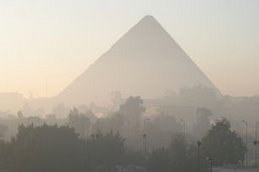
![www.egyptdailynews.com/My%20Webs/edailypics/frontview[1].jpg](http://www.egyptdailynews.com/My%20Webs/edailypics/frontview[1].jpg)