
One of the joys of preparing for such a trip is doing the background reading. In this case, much of the historical background comes from the writings of early travelers — by camel and by car — during the opening third of the twentieth century. These books include The Lost Oases by the suave Ahmed Hassanein Bey, Libyan Sands by Ralph “On-On-Baggers” Bagnold and the recent The Hunt for Zerzura by Saul Kelly. In these travelogues I have been able to turn up a better picture of the contemporary fauna of these areas and put at least a little flesh on the scientific literature’s skeletal form.
The search did not start out promisingly. Take this entry from one of Bagnold’s expeditions: “This part of the country is such a sterile wilderness that any life besides our own was unexpected. South of the Ammonite Scarp [towards the Gilf Kebir] not even a bird was to be seen. No vegetation, dead or alive, had been seen for the last 220 miles.”
This is not encouraging prose for a naturalist. But just a little further on: “Yet life there was. At our next camp a colony of jerboa kept us awake by hopping over our faces at night, and investigating the contents of our cooking pots. What do they live on? Surelynothing but sand!” These would be Lesser Egyptian Jerboas described in last month’s column — the original “Desert Rats.”
Most poignant is the Zerzura in the title of Kelly’s book.
See the above page for the entire story.


1 comment:
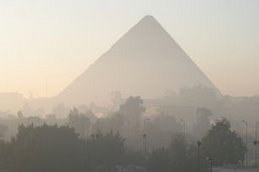
'm sorry it's so grey there today, but here (Cleveland, Ohio) it's expected to go near 0 degrees F., and there's a lake effect snowstorm. I think I'll trade your fog for my cold snow! :)
Post a Comment