Sky News was interviewing Hawass in his office yesterday when the Minister's assistant interrupted to say a crowd was trying to break down the gates. Hawass used his mobile phone to call in the Army, Sky reported.
"It's chaos," Hawass told the Sky News team. "The revolution will destroy Egypt. It's happening everywhere. How can I suddenly give all these people jobs."
As the journalists left the ministry, Sky News said, the crowd forced the gates and stormed the forecourt shouting: "Give us work."
"Ahmad showed us his degree certificate and masters in archaeology. He had come many times to the ministry to find work but nepotism and corruption meant it was always someone else who was hired," Sky News reported.
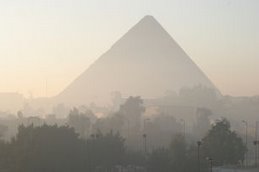
At the famous pyramids of Giza, Sky News continued, "A camel belched angrily at our camera while his owner said he could only afford to feed him twice rather than five times a day. Others told us they were forced to sell off their animals to raise money to feed their families.
Saturday, February 19, 2011
Unemployed archaeologists protest at Ministry
National Geographic (David Braun)


Book Review: La Biblioteca di Alessandria
Bryn Mawr Classical Review (Reviewed by Alexandra Trachsel)
Monica Berti, Virgilio Costa, La Biblioteca di Alessandria: storia di un paradiso perduto. Ricerche di filologia, letteratura e storia 10. Roma: Edizioni Tored, 2010.
The study on the Library of Alexandria presented in this book is based on the results of the current research projects of the two co-authors. Both scholars are working on fragmentary texts from the Hellenistic period and have edited collections of fragments from ancient authors where the question of the selection and transmission of texts is crucial.1 In addressing this question, the authors have been brought to focus also on the function and the impact of the Library of Alexandria in processes of selection and transmission. Furthermore, both authors are developing their own projects in the field of digital humanities2 and this is an additional reason, as they admit themselves, for their scholarly focus on the Library of Alexandria. The link between these two topics is clearly stated in the first lines of the book and gets fully developed in the last chapter, entitled "Ritorno ad Alessandria." In between, the study offers a very wide panorama, based on an up-to-date bibliography, including both the process which led to the creation of the Library of Alexandria and the activity carried out within this institution. Another distinctive feature of this study, which differentiates it from other works on the Library of Alexandria, is the fact that it is framed by two chapters of a more deliberative nature. The first is a summary of the controversial evidence from Antiquity about the location of the library , while the last one, as just mentioned, draws parallels between the modern projects of "universal libraries" in digital form, such as Europeana and Google Books, and their Alexandrian model from Antiquity.
Online Resource: Jebel Barkal
jebelbarkal.org
An excellent resource for Jebel Barkal (Sudan), with lovely photographs of the site and area. Here's a short exerpt from the introduction:
An excellent resource for Jebel Barkal (Sudan), with lovely photographs of the site and area. Here's a short exerpt from the introduction:
Jebel Barkal (“Mt. Barkal”) (var. Gebel Barkal, Gebel el-Barkal, and in some early sources Gebel Berkel/Birkel) is the modern Arabic name of a lone sandstone butte on the western edge of Karima, Sudan, about 365 km NNW of Khartoum and 23 km downstream from the Merowe Dam at the fourth cataract of the Nile; its coordinates are 18º 32’ N, 31º 49’ E).1 Situated about 1 1/2 km from the right bank, it rises to a height of 104 m above ground level and confronts the river with a sheer cliff 80 to 90 m high and approximately 200 m long (fig. 1). The mountain’s unusual appearance – its isolation, sharp profile, and spire-like pinnacle, 75 m high – made it a natural wonder in ancient times and excited intense theological speculation.
When the Egyptians conquered northern Sudan (Kush/”Upper Nubia”) in the early Eighteenth Dynasty (ca. 1504 BCE), they identified Jebel Barkal as the birthplace and chief southern residence of their state god Amun. As part of their program of conquest, they established the cult of Amun in many places in Nubia, but Jebel Barkal seems to have had a unique importance for them as a creation site and home of a primeval aspect of Amun who renewed life each year with the Nile inundation. Beneath the Jebel Barkal cliff the Egyptians constructed a major religious center and gave it the same name as Karnak (Ipet-Sut), Amun’s great sanctuary at Thebes, some 1250 km downriver (fig. 2). The Egyptians called the hill variously Dju-Wa’ab (“Pure Mountain”) and Nesut-Tawy (“Thrones of the Two Lands.”) (which in Dynasty 25 and the Napatan Period sometimes became Neset-Tawy [“Throne of the Two Lands”]). The settlement which grew up around it they called Napata, which became the southernmost town in their African empire.
Museums in Luxor to re-open today
Luxor News Blog (Jane Akshar)
Thanks to Jane for the news that the Mummification Museum and Luxor Museum will both be re-opened today, Saturday 19th.
Egyptology News is now on Twitter
 It's not exactly the news of the century but for those of you who prefer to follow Twitter to collect your news, you can now find Egyptology News at http://twitter.com/egyptologynews.
If you're in the UK and you really want my posts to follow you around you can get updates via SMS by texting
follow egyptologynews to
- 86444 in the United Kingdom or
- 40404 in the United States
For other countries you can see the above page for the access codes for other countries.
It is set up to give you the heading of the post and a link to the post itself. It only shows the most recent five posts on a given day, and there are usually more than that. Unless someone has some magical fix there appears to be no way around this.
Enjoy!
On the subject of social networking I no longer have a Facebook account. This is a temporary state of affairs.
Photo for Today - Ptolemaic temple, Deir el Medina


Friday, February 18, 2011
Civil-Military Assessment Mission for Egyptian Heritage
Blue Shield
With gallery.
With gallery.
Objective
The objective of the mission was to assess possible damages and looting attempts to Egyptian Heritage sites and museums after the recent unrests.Many contradicting messages were reported regarding looting and vandalism, without the possibility of properly checking the real situation. Therefore there was an urgent need to send a mission especially to those sites that were supposedly affected by criminal acts, in order to document the situation, to state damages incurred and to encourage the parties involved to further efforts in protecting the invaluable Cultural Heritage of Egypt.
A Trade Older than the Pyramids
Geoffrey Tassie (Managing Director of the Egypt Cultural Heritage Organization) wrote the following article back in 2006 when discussions about the St Louis Mask were taken up with considerable interest by the media. I posted it on the blog at that time, but thought that it was well worth posting again in the light of recent statements by the St Louis Art Museum.
Trade Older than the Pyramids
by Geoffrey Tassie
Egyptian Cultural Heritage Organization
by Geoffrey Tassie
Egyptian Cultural Heritage Organization
Not a single great pyramid escaped the attentions of the tomb-robbers. Soon after their burial the tomb-robbers went to work. However, the trade was already over a thousand years old by the time Khufu built his Great Pyramid at Giza. As Egyptian society became more complex and ruling elites arose, creating separate cemeteries for themselves at places such as Abydos, Hierakonpolis, and Naqada, so the opportunity and temptation arose to make a fast buck. Many tombs from the Naqada II period, c. 3,650 BC, have been found plundered at these famous early sites. The robbers often showed complete contempt for the individuals interred, ripping their bodies to bits to get to the glittering jewels that once adorned their bodies. The tombs of the first kings of Egypt at Umm el-Qa’ab, Abydos were not only robbed but show signs of burning.
The great tombs of the First Dynasty high officials at Saqqara were also systematically robbed. Even in the provinces, at such sites as Kafr Hassan Dawood, one of the two great tombs was found with a robbers’ trench in the exact location where the local ruler’s body once lay.
Giza Pyramids and Sphinx
In late Dynasty XX, of the New Kingdom a papyrus scroll (P. Abbott) from year 16 of Ramesses IX’s reign gives the statements of tomb-robbers caught in the act. One such robber was Amenpanufer, a quarryman attached to the Temple of Amun in Thebes. His testament states that he went to the tombs in the west of Thebes with his accomplices and gathered up the gold and silver in the tombs, took their bronze chisels and opened the sarcophagi and carried away the gilded inner coffins to strip the gold from them and the jewellery from the body. They then burnt the coffins and distributed the booty amongst themselves. The fate of these tomb-robbers is uncertain, but they may have ended up skewered on a wooden spike along the banks of the Nile. However, this report led to a commission being established to investigate tomb-robberies from Dynasty XI, and XVII tombs, as well as that of Amenhotep I of Dynasty XVIII and members of the royal family in the Valley of the Queens. The commission did not visit the Valley of the Kings, burial place of later New Kingdom kings, probably as it had no reason to doubt its integrity. However, two reigns later after Ramesses XI was interred in the Valley of the Kings it was abandoned as a royal burial ground.
So serious was tomb-robbing considered in Dynasty XX and XXI that many other papyri record the statements of convicted robbers. In fact, by the end of Dynasty XXI, Nespekeshuty, a high official in the reign of Psusennes II ordered the reburial of the High Priests of Amun, including many members of Herihor’s family and buried them in a secret tomb high in the hills above Deir el-Bahari. This location, above Hatshepsut’s Temple, was also chosen by Nespekeshuty and the priests of late Dynasty XXI, as the reburial place of the New Kingdom royalty. The priests rewrapped and buried many of the most famous kings of the New Kingdom, such as Ramesses II in the large Middle kingdom tomb now known as DB320. The High priests of Amun were buried in one chamber and the kings in another, although coffins were found littering the corridors. Nespekeshuty, in fact chose this tomb as the burial place of Psusennes II. This tomb continued to be used for several years to hold the mummies of the priestly family who ruled Thebes after Psusennes II along with some more royal mummies. A second cache of royal mummies was stored in the tomb of Amenhotep II, KV35 by the High Priests of Dynasty XXI. The recently discovered KV63 also contains a small cache of mummies (5), although their identity at present is unknown.
Deir el Bahri
Egypt’s royalty lay relatively undisturbed for many thousands of years, with only the odd Luxor West Bank villager, particularly those from Qurna, using the mummy wrappings, old furniture and papyri as good burning material for their cooking fires. However, with the influx of Western tourists after the Napoleonic Expedition, the local West Bank villagers, many of whom actually lived in the tombs, found that they could make a small fortune by selling items from the tombs that they lived among. The trade in antiquities soon caught on, with every visitor wanting a souvenir of their visit. There was no real control on the trade in antiquities, and it wasn’t until Auguste Mariette formed the Egyptian Antiquities Service in 1858 that real care in preserving Egyptian cultural heritage started to be taken. However, the art of tomb-robbery by this time was being taken up with great gusto by the villagers of Qurna. One particular family, the notorious Abd el-Rassul family were particularly adept tomb-robbers and sellers of antiquities. Mohammed Abd el-Rassul was the eldest brother a ring-leader of this gang of villains. In 1871 he discovered the tomb full of royal mummies behind Hatshepsut’s Temple. To keep prying eyes away he put a dead donkey near the entrance, changing it every-so-often when it got too putrid. He and his band sold some of these antiquities to dealers and collectors. Egyptologists soon became aware of these new royal artefacts and became inquisitive as to their origin. When news broke about the cache of mummies from the local antiquities inspectors in Luxor, Émile Brugsch's (Assistant Curator/Conservator at the Cairo Museum) went down to investigate, due to the absence of his superior, Gaston Maspero who was in France. Brugsch then arranged for these mummies to be transferred to the Cairo Museum, where they remain on display.
Following in the footsteps of Amenpanufer and Mohammed Abd el-Rassul are many modern day illicit antiquity thieves and dealers, such as Mohamed Ali Farag, Gérard Razier, Jonathan Tokeley-Parry, Ali and Hisham Aboutaam, Mamdouh Michael, Frederick Schultz, and Abdul Karim Abu Shanab. Many of these villains’ activities are mentioned in the ECHO News article On the Trail of Illicit Antiquities (http://www.e-c-h-o.org/LatestNews.htm#17) and in the Archaeology article Selling the Past (http://www.archaeology.org/online/features/schultz/details.html).
In circa 1986, the so-called Sekhemkhet Magazine (Storehouse) at Saqqara was broken into and looted by Ali Farag and his team. Dr Maarten Raven, who has had years of experience excavating at Saqqara states: "Objects of our 1985 season were included in the theft". Raven and his associates reported this theft to the antiquities authorities (the now SCA) who made a full inventory of the Magazine and confirmed that objects from the excavation of Sekhemkhet’s pyramid had also fallen victim to the robbery. One of the objects from the Sekhemkhet excavations, conducted in the 1950s by Mohammed Zakaria Goneim, is the Kanefernefer mask, now on display in the St. Louis Art Museum and published in Goneim’s 1956 excavation monograph. This Museum bought the mask in 1998 from the Aboutaam brothers, who had provided a dubious provenance. Dr. Raven states, in his open letter and further communications, that he cannot say for certain whether the Kanefernefer mask, now in the St. Louis Art Museum, was among the looted objects. However, he is certain that the mask never went to the Museum of Egyptian Antiquities, Cairo with other objects from Goneim's excavations. A good article about the dubious provenance of the Kanefernefer mask is to be found on the website of the River Front Times: (http://www.riverfronttimes.com/Issues/2006-02-15/news/feature_full.html)
Ali Aboutaam of Phoenix Ancient Art claims that the provenance for the mask is legitimate, saying “We do our business in the most legal way. Many things were sold from Egypt in the 1970s”. In 1970 the United Nations Educational, Scientific and Cultural Organization (UNESCO) adopted the Convention on the Means of Prohibiting and Preventing the Illicit Import, Export and Transfer of Cultural Property, which binds member nations to help retrieve stolen or illegally exported items at the request of another member state. Although both the UK and USA were late arrivals at UNESCO's party, these two giants of the Western World have now ratified the Convention. In 1983, the same year that the US ratified the UNESCO Convention, the Egyptian government passed a new antiquities law (117) mandating that any cultural artifact unearthed in that country after 1983 belonged to the Egyptian state. This international law means that any object taken out of Egypt illegally (without legal title) since 1970 and residing in a
country that has ratified the convention, must be returned. Therefore, if the Aboutaam’s have objects exported from Egypt in the 1970s, they are legally bound to return them to Egypt. A claim may also be made if an object can be proved to have left the country illegally prior to 1970, although this is a more complicated legal affair.
Since 2002, the year Zahi Hawass took charge of the SCA, Egypt has stepped up its recovery efforts and begun actively litigating for the return of what they see as their cultural patrimony. Dr Hawass founded the Department of Stolen Artifacts for the express purpose of retrieving pieces of Egypt’s cultural heritage. The New SCA regulations state: “Members of foreign missions are expected to yield any information they have regarding stolen artifacts to the Department of Stolen Artifacts. It is absolutely prohibited for any member of a mission to be involved with dealers of stolen artifacts. People who are found by court evidence to be involved with stolen artifacts will be removed from the excavation. If the director is involved, the mission will be terminated.” This new offensive by Hawass and his SCA department has been relatively successful over the past four years (see On the Trail of Illicit Antiquities). Dr Hawass’ actions must be commended upon, for trying to stem a trade that is over 5,500 years old is like trying to stop prostitutes selling their wares on street corners. However, Soho in London is now relatively clean of vice girls, so it is possible. Hawass’ attentions are now focused on the St. Louis Art Museum and the repatriation of the Mask of Kanefernefer. Hawass states: “the mask belongs to Egypt? by every standard, from the strictly legal to the ethical and moral, it must be returned immediately. We are asking for [the Museum’s] cooperation; if this is not immediately forthcoming, we will contact Interpol and start legal proceedings.” (http://www.theartnewspaper.com/article01.asp?id=176)
Zahi Hawass
ECHO has been very proactive in following the rights of legal ownership of the mask of Kanefernefer, and in co-operation with Dr. Zahi Hawass (Secretary General of the SCA), Dr. Hany Hanna (Elected Chair, ICOM and General Director, Department of Conservation, SCA), and a legal representative in the USA are now convinced that there is a legal case for the Egyptian Government to pursue. ECHO are also on the trail of some other artefacts that they believe to be illicit, and will speak out on this shortly.
Although the trade in illicit antiquities will never be stopped, museums must start to question the provenance of antiquities they purchase on the open market more closely, having provenances such as ‘A European collection’ or ‘formerly in the collection of Mr Smythe, Zurich’ is no longer acceptable. The reason that archaeologists are so against the illicit antiquities trade is that the context of the artefact is missing, meaning that most of its archaeological value is lost. All that is left is the artefact itself, which although it may be beautiful, and you may be able to tell how it was made and what it is made of, cannot really tell much about the people that made it. It is only by an artefacts placement on site and its association with other finds that interpretations can be made about the object and the people that used it. Also, sites are often destroyed by the looters, who leave it looking like a bomb site, and destroy all the valuable information about past human societies.
More re the St Louis Mask
Looting Matters (David Gill)
Tim has had a look at the background to the St Louis mask, digging out articles from the past few years to follow and explain the story.
David Gill has had a look a the the St Louis Art Museum in the context of its membership of the Association of Art Museum Directors (AAMD). In 2008 the AAMD published "2008 Report of the AAMD Subcommittee on the Acquisition of Archaeological Materials and Ancient Art", and David Gill considers how this impacts the Museum's responsibilities.
Egyptians (Tim Reid)Tim has had a look at the background to the St Louis mask, digging out articles from the past few years to follow and explain the story.
Photo for Today - the Avenue of Sphinxes at Luxor Temple

The start of an avenue of sphinxes that originally stretched
to the Temple of Karnak which lies approximately North.
Photo and text by Jon Bosworth, with my thanks.
[This is an old photograph - the mosque at the end of the photo
has been removed so that the Avenue can be used by tourists to walk
from Luxor to Karnak, one of many sacrifices. Andie].
to the Temple of Karnak which lies approximately North.
Photo and text by Jon Bosworth, with my thanks.
[This is an old photograph - the mosque at the end of the photo
has been removed so that the Avenue can be used by tourists to walk
from Luxor to Karnak, one of many sacrifices. Andie].
Thursday, February 17, 2011
Official news - Akhenaten statue returned, but bad news from other sites
drhawass.com (Zahi Hawass)
With photo of the returned artefact.
The offering table held between the hands of the statue was found earlier in the museum itself, so the statue will need to be restored.
Bad news from Hawass and his office are as follows:
With photo of the returned artefact.
Today, I announced that the missing limestone statue of King Akhenaten, the father of Tutankhamun, has been returned to the Egyptian Museum, Cairo. This unique statue, which dates from the Amarna Period (ca. 1353-1336 B.C.), is 37 centimeters high and depicts the king standing, wearing a blue crown, and holding an offering table in his outstretched hands. The statue is made of painted limestone, and stands on a base of Egyptian alabaster.
I was informed that a sixteen-year-old male, one of the protestors at Tahrir Square, had found the statue of Akhenaten near the southern wall of the museum, and took it home. The boy's family immediately called the Ministry of State for Antiquities Affairs to arrange for the statue's return to the Museum.
Last night, at the Antiquities and Tourism Police station at Cairo Opera House, an archaeological committee headed by Dr. Youssef Khalifa, Director of the Stolen Antiquities Department of the Ministry, accepted the statue of Akhenaten from Dr. Abdel Rahman. The committee confirmed its authenticity and identified it as the missing sculpture.
Bad news from Hawass and his office are as follows:
- At Saqqara, the tomb of Hetepka was broken into, and the false door may have been stolen along with objects stored in the tomb. A committee will visit the tomb on Saturday to compare the alleged damage with earlier expedition photos.
- Also at Saqqara strage magazines were broken into. A committee will report on what, if anything, is missing from those magazines
- In Abusir, a portion of the false door was stolen from the tomb of Rahotep
- The military have interrupted thieves attempting to loot the site of Tell el Basta and Lisht.
- Inspections are being made at other archaeological sites where illegal digging and looting have been reported.
Hawass has also announced that Coptic, Islamic, and modern sites would reopen to the public on Sunday, 20 February, 2011. The decision was made in consultation with the Antiquities and Tourism Police.
[NB - Sites in Luxor are reported to be open already and are more than ready to welcome visitors].
[NB - Sites in Luxor are reported to be open already and are more than ready to welcome visitors].
Update on current state of antiquities
drhawass.com (Zahi Hawass)
Yesterday Hawass issued another update re the current state of antiquities in Egypt. Exerpt:
The main points that the update makes are:
Egyptian Museum, Cairo
Dashur
Qantara East in the Sinai
Yesterday Hawass issued another update re the current state of antiquities in Egypt. Exerpt:
Dr. Hawass said it seems the looters dropped objects as they fled, and every inch of the museum must be searched before the Registration, Collections Management, and Documentation Department, which is overseeing the inventory, can produce a complete and final report of exactly what is missing. The museum staff is not yet able to move freely within the museum, and has, until now, had to walk in groups of 10-15 people, accompanied by soldiers. Unfortunately, this has slowed down the search, and made it very difficult to carry out a final inventory. The army is allowing very few people into the museum, and the first time the museum’s office staff was allowed in was on 6 February 2011. The list announced in the press release of 12 February, 2011 is preliminary, and will continue to be updated as new information comes to light. As Dr. Hawass has previously stated, until a full and thorough search of the museum and its grounds has been completed and all of the damaged vitrines inventoried, a list of missing objects cannot be finalized.
The main points that the update makes are:
Egyptian Museum, Cairo
- Some items thought to be missing were retreived from trash cans and other areas of the museum grounds
- Heart scarab of Yuya, one of missing Yuya and Thuya shabtis have been recovered
- Part of wooden sarcophagus has been found
- Re the statue of Tutankhamun carried by the goddess Menkaret, the fragments of Menkaret have been recovered but the Tutankhamun part of the statue is still missing.
- Stories that the Tutankhamun mask had been stolen are wrong
- The museum is still closed to visitors
Dashur
- All of the large and small blocks are safe
- The only missing items appear to be small amulets
Qantara East in the Sinai
- 298 have been returned from those looted at the end of January
- The committee will take a full inventory and compare it to earlier inventories to determine whether or not everything has been returned
Politics and Heritage in Egypt
Culture In Development (Rene Teijgeler)
Thanks to Jan Picton for the link. The link on the above page opens as a PDF. Exerpt:
Thanks to Jan Picton for the link. The link on the above page opens as a PDF. Exerpt:
The public outcry against the looting of Egypt’s National Museum and several archaeological sites underlines the concern of the international heritage community over the safety of Egypt’s heritage. Many remind us of the blast in 2001 of the Bamyan Buddha’s in Afghanistan and the massive plunder of Iraq’s heritage after the 2003 invasion. As common in times of unrest and chaos the information coming from the conflict zone is often contradictory and not always reliable. To make at least a little sense of the information it has to be put in its context. What is the socio-political and economical context of the recent plundering? What is the role of Egypt’s cultural heritage in this ‘Lotus revolution’?
Rene Teijgeler
Culture in Development
www.cultureindevelopment.nl
Restoring artefacts - What does it take?
PBS Newshour (Evan Conway)
As the dust settles on Egypt's recent protests, one less-discussed outcome of the uprising is the damage done to some of the country's ancient artifacts. After would-be looters broke into the famous Egyptian museum in Cairo in search of gold on Jan. 29, approximately 70 artifacts were damaged.
Among the items were several small statues, a 3,000-year-old tomb, and a statue of King Tutankhamun. The king, who formerly stood atop a panther, was severed from the animal after the break-in.
With some twenty-five artifacts now in line for restoration, we looked further into the science of conservation.
"Science plays a much larger role than it used to in conservation," said Paul Jett, head of the Department of Conservation and Scientific Research at the Freer and Sackler galleries. Conservation science has a three-pronged focus that includes the study of materials and their deterioration, treatment of those materials, and the use of scientific methods to answer historical questions.
The Tutankhamun panther prior to restoration
drhawass.com
A sad photograph of the panther from the damaged statue of Tutankhamun standing on a panther before restoration work began.
After the revolution, who will control Egypt's monuments?
Science Insider (Andrew Lawler)
With thanks to Tony Marson for this link.
With thanks to Tony Marson for this link.
As Egypt struggles to lay the foundations of a new government in the wake of its revolution, archaeologists around the world are closely watching the fate of the nation's prized antiquities—as well as the fortunes of Zahi Hawass, long the face and voice of the country's ancient monuments. Hawass, who under Hosni Mubarak was recently named minister of antiquities, has been confronting an unusual uprising among his own staff as well as questions about his political future. And today, he reported a theft at a cemetery south of Cairo, as well as eight missing artifacts from the Egyptian Museum, located on Tahrir Square itself. Archaeologists are left wondering about the effects of the revolution on the dozens of excavations in the country, as well as on the next generation of homegrown researchers.
American collectors eye events in Egypt with mistrust
PR Newswire
Ongoing developments in the Egyptian revolution and its reverberations in the Middle East have the world riveted on this historical event. Beneath the headlines, vacillating reports of vandalism and looting that allegedly took place at the Egyptian Museum in Cairo and other sites have American collectors skeptical of motivations behind the apparent orchestration of news. Spotty and contradictory reports of museum looting had barely surfaced when members of the American archaeological community were calling for import restrictions on artifacts made in Egypt. It is unclear whether any of these calls have led to consideration of such action within the Obama administration.
According to Kerry K. Wetterstrom, President of the Ancient Coin Collectors Guild (ACCG), the reason for concern among collectors is that import restrictions like those sought by archaeologists have typically been applied far and beyond the scope of authority vested under U.S. law. Restrictions are being applied to common objects traded for centuries without provenance requirements.
Protests turn against Minister Hawass
Bikya Masr
MSNBC
Al Ahram Weekly (Nevine El Aref)
Bikya Masr
Egypt’s Zahi Hawass, the man who has become synonymous with Egyptology, known for his cowboy had wearing, has sparked the ire of Egyptians in recent days, with protests chanting for him to step down from his post atop the country’s Supreme Council of Antiquities.
Ironically, as reports of stolen artifacts continues to surface since Hosni Mubarak was ousted from power on Friday, Hawass went public during the demonstrations and declared, triumphantly, that nothing has been stolen from the Egyptian Museum in downtown Cairo following the break-in on January 28.
“Get out,” chanted a crowd of 150 archaeology graduates outside Hawass’ office on Monday. The protest was highly personal: demonstrators called Hawass a “showman” who seeks publicity and has little regard for the thousands of archaeology students who are unable to find work in their field.
Hawass has been under fire from a number of sides in recent years including from rights groups who accuse the man of dictatorial polices concerning debate and scientific findings.
MSNBC
The political upheaval in Egypt has thrown Egyptian archaeology into a state of uncertainty — expeditions have been disrupted and Zahi Hawass, the head of the country's antiquity council, is now coming under fire from protesters.
Known for his flamboyant style – including an Indiana Jones-style fedora – and his boosterism of Egypt's treasures, Hawass is the face of Egyptian archaeology. As secretary general of the Supreme Council of Antiquities (SCA), Hawass is in charge of approving any archaeological research that goes on in Egypt.
And he's now the central figure in a war of words, with some archaeologists taking verbal shots at him for what they see as a corrupt system, and others, in interviews with LiveScience, defending his character and his actions.
Al Ahram Weekly (Nevine El Aref)
Protesting employees demonstrated Wednesday outside the ministry's Zamalek premises demanding better wages and the appointment of seasonal employees. Another of their demands was the removal of the culture ministry's supervisor, who supervises the construction work of the National Museum of Civilization, the Grand Egyptian Museum and the rehabilitation project of historic Cairo.
Zahi Hawass, minister for antiquities, met with the protesters and announced that procedures to increase the salaries were taken in January. As for the appointment of new employees, he said this will be studied once the country is stable, archaeological sites reopen and tourists return; the main source of the ministry’s budget.
Bikya Masr
Egypt’s antiquities chief found himself in hot water on Monday, the target of angry protesters who want him to quit. At the end of January, Zahi Hawass triumphantly declared that nothing had been stolen from the famed Egyptian Museum after a break-in on January 28.
Recently, however, a number of high-profile artifacts have been declared missing.
“Get out,” chanted a crowd of 150 archaeology graduates outside Hawass’ office on Monday. The protest was highly personal: demonstrators called Hawass a “showman” who seeks publicity and has little regard for the thousands of archaeology students who are unable to find work in their field.
The demonstration is one example of the strikes and protests which have sprouted across the country since the resignation of 30-year president Hosni Mubarak on Friday.
Tour guides at the Giza ask for tourists to return
The Telegraph, UK (Nick Meo)
Some held up signs with a Valentine's Day theme saying "Egypt loves you" and insisted that it was safe for foreigners to come back. The tourist industry has been badly hit by weeks of turmoil at the peak of the holiday season, costing perhaps billions of pounds of lost income for the nation. Tour guides and camel drivers who live off tips from wealthy visitors have earned nothing for weeks and many have suffered real hardship.
"We need to make tourism come back to Egypt," said Hossam Khairy, 27.
"We want to send the message to tourists all over the world that they are welcome here. They will discover a new country and new people." The three great pyramids, one of the wonders of the ancient world, were virtually deserted on Monday, with only two nervous-looking Spaniards and a handful of Egyptian visitors making the most of a rare chance to visit the site without hordes of tourists. Touts who usually pester visitors were also absent, with only a handful trying half-heartedly to sell postcards or plastic sphinxes.
Alerts issued re Egyptian antiquities
UNESCO
UPI.com
UNESCO Director-General Irina Bokova has called for increased vigilance from national and international authorities, art dealers and collectors following reports of the theft of several important relics from the Egyptian Museum in Cairo and other sites throughout the country.
“It is particularly important to verify the origin of cultural property that might be imported, exported and/or offered for sale, especially on the internet,” the Director-General said. “This heritage is part of humanity’s history and Egypt’s identity. It must not be allowed to vanish into unscrupulous hands, or run the risk of being damaged or even destroyed.
“UNESCO will be working closely with its international partners in this field, including INTERPOL, the World Customs Organization (WCO), the International Centre for the Study and restoration of Cultural property (ICCROM) and the International Council of Museums (ICOM) to prevent this from happening.
“But I would also call on security forces, customs agents, art dealers, collectors and local populations everywhere - to do their utmost to recover these invaluable pieces and return them to their rightful home.
UPI.com
The United Nations has alerted art dealers, collectors and governments around the world to be on the lookout for items reported stolen from Egypt.
The U.N. Educational, Scientific and Cultural Organization, responsible for preserving world cultural heritages, said the relics and other artifact have been reported stolen from the Egyptian Museum in Cairo and other sites in the country. . . .
"It is particularly important to verify the origin of cultural property that might be imported, exported and/or offered for sale, especially on the Internet," said UNESCO Director-General Irina Bokova. "This heritage is part of humanity's history and Egypt's identity. It must not be allowed to vanish into unscrupulous hands, or run the risk of being damaged or even destroyed."
UNESCO plans to work closely with its international partners -- including INTERPOL, the World Customs Organization, the International Center for the Study and Restoration of Cultural Property and the International Council of Museums.
Subscribe to:
Posts (Atom)