Thursday, February 18, 2010

Wine press discovered in southern Israel

Daily Mail

With photographs.

Israeli archaeologists have discovered an unusually shaped 1,400-year-old wine press that was exceptionally advanced for its time.

The octagonal press measures 21ft by 54ft and was discovered in southern Israel, around 25 miles south of both Jerusalem and Tel Aviv.

At the time the press would have been used, the whole area was part of the Byzantine Empire - the eastern half of the old Roman Empire.
wine press

Vintage: Archaeologists have discovered a 1,400-year-old wine press in southern Israel which was very advanced for its time

Excavation director Uzi Ad, of the Israel Antiquities Authority, said: 'What we have here seems to be an industrial and crafts area of a settlement from the sixth to seventh century, which was situated in the middle of an agricultural region.

'The size of the wine press attests to the fact that the quantity of wine that was produced in it was exceptionally large and was not meant for local consumption.'

The wine was probably intended for export to Egypt, then a major export market, or to Europe, he added.

Sun reaches the gods at Abu Simbel on 22/02

Egypt Today

Twice a year, on February 22 and October 22, the sun illuminates the statues of Ramses II, Ra and Amun in the sanctuary of the Great Temple of Abu Simbel. People flock to see the statues’ normally shadowed faces light up with the rays of the rising sun. The temple was aligned in antiquity so that this solstice would occur on Ramses II’s birthday and on the anniversary of his coronation.

Exhibition: To Live Forever

New York Post (Stephen Brown)

As the exhibition demonstrates, the lives of the lower classes can be more interesting and insightful than the dazzling opulence of the privileged few.

“Typically upper-class material is shown at Egyptian exhibits,” said curator Edward Bleiberg. “Showing [burial] objects from the lower classes is a way for us to connect to the ancient Egyptians. Their problems are the same as ours: ‘How am I going to the pay the bills for this?’ ”

Indeed, then, as now, everyone wanted to be comfortable in the hereafter.

That explains one choice piece in the show: a sarcophagus for a commoner made from cheap clay and painted yellow to imitate the gold that would line a royal coffin, a desperate attempt to impress the gods.

As the exhibit shows, Egyptians from pharaoh to plebeian were keen to pimp their coffins in a variety of creative ways, even if it meant defiling someone else’s.

Exhibition: A Collector’s Menagerie

Art Daily

The Sladmore Gallery, 57 Jermyn Street, St James’s, London, is renowned for exhibiting animal sculpture from the last 200 years, and has now invited Rupert Wace Ancient Art to introduce collectors to a veritable menagerie from the ancient world, spanning a period of some 2,400 years. A Collector’s Menagerie: Animal Sculpture from the Ancient World will be on view from Wednesday 12 to Friday 28 May 2010. Around 70 important and appealing pieces will be offered for prices ranging from £1,000 to over £150,000. . . .

One of the best known Egyptian gods is Bastet represented by the cat and, indeed, the most prized piece in this exhibition is a handsome bronze mummy mask of a cat’s head, its large scale indicating that it would have belonged to a particularly important or venerated cat. Dating from the Late Dynastic Period, 25th-31st Dynasty, 715-332 BC, it was formerly in the Albright-Knox Art Gallery, Buffalo, New York, the bequest of Arthur B. Michael, 1941 (fig. 2). The female cat came to be associated uniquely with Bastet, an ancient goddess worshipped at Per-Bastet (Bubastis) in the Delta. The seated cat, an example of which is also included in this show, represents the goddess on earth and would have been the focus of ritual and worship in the temple (fig. 3).

Other Egyptian animals and birds represented in the exhibition include bulls, baboons and crocodiles, falcons, vultures, ibis and owls, and these, like the cat, either represent gods or goddesses or are important protectors of the king. The materials used to represent them vary from gold and bronze to wood and terracotta.

Exhibition: Mummies of the World

PR Newswire

American Exhibitions, Inc. announced today that the City of Los Angeles has been chosen for the world-debut of Mummies of the World, the largest traveling exhibition of mummies ever assembled. Unlike any exhibition in history, Mummies of the World presents a never-before-seen collection of both accidental and intentionally preserved mummies, presented with reverence and dignity -- and for the first time allowing one to scientifically and historically delve into the past lives and rich history of the world's cultures, as it is presented at the California Science Center. This groundbreaking exhibit that opens July 1 will feature more than 150 objects and artifacts from the four corners of the globe.

With its debut in Los Angeles - the entertainment capital of the world, where movie screen mummies are depicted as sometimes vengeful, this never-before-seen exhibition will dispel any preconceived notions about mummies. The exhibit will reveal how the scientific study of mummies provides a window into the lives of ancient peoples from every region of the world. In addition to its sheer scale and scope, a unique feature of this exhibition is its attention to state-of-the-art mummy studies.

Book Review: Early Christian Books in Egypt

Scholia Reviews (Review by Jonathan More)

Scholia Reviews ns 19 (2010) 1.

Roger S. Bagnall, Early Christian Books in Egypt. Princeton and Oxford: Princeton University Press, 2009.

Christian manuscripts discovered in the Egyptian desert have supplied students of early Christianity with previously unknown texts. They have also attracted the attention of those concerned with establishing the original text of the canonical New Testament as accurately as possible. But these manuscripts have increasingly been recognised as artefacts in their own right and scholars have turned to them to understand more about the social and economic life of the communities for which they were produced. It is to this field that Roger Bagnall, doyen of things papyrological and Egyptian (and, since 2007, Director of the Institute for the Study of the Ancient World at New York University, where he is also Professor of Ancient History), has contributed a series of four provocative studies addressing some disputed issues surrounding early Christian manuscripts. The four chapters of the book are based on lectures delivered by Bagnall at the École Pratique des Hautes Études in May 2006.

Current knowledge of second-century Egyptian Christianity is based almost exclusively on various literary traditions, with very little documentary and archaeological evidence surviving. The first chapter of this book, 'The Dating of the Earliest Christian Books in Egypt' (pp. 1-24), examines this problem more closely.

Resource: Coptic Library Online

COPTICA

Most of the references listed are in French, with some in German and English.

Le site personnel COPTICA est destiné aux étudiants en langue et littérature copte ainsi qu'aux amateurs intéressés. Les uns y trouveront les textes et indices nécessaires à la poursuite de leur cursus universitaire (baccalauréat et maîtrise), mais aussi des liens essentiels. Les autres y trouveront informations et outils de travail.

The Black Pyramid

drhawass.com

There's a good aeriel photograph of the Black Pyramid of Amenemhat III at Dashur on the above address. Here's the caption:

Aerial view of the pyramid of Amenemhat III at Dashur. Called the Black Pyramid because of its dark color, it was built in the Middle Kingdom, and the interior contains a complex system of tunnels and chambers. Due to the removal of the outer limestone casing, the pyramid has fallen into ruin.

There's a summary of what is known about the pyramid at the same site.
www.drhawass.com/blog/pyramids-dashur-3-black-pyramid

Photo for Today - Medinet Habu

I'm afraid that you're going to have to wait until I'm back in London for the remainder of Lucia's terrific Amarna photographs. Instead, the next ones will be a selection from my laptop - which now has more than desert photographs!

As today's lead post is about Medinet Habu I decided to go with a couple of very small photographs of the temple, taken in 2002. Sorry that they cannot be expanded, but if anyone particularly wishes to see a bigger copy/ copies let me know and I'll re-scan them when I return to London.


Wednesday, February 17, 2010

Ancestry and pathology in Tutankhamun's family

My inbox and my news alerts have all gone mad with the news about the Tutankhamun DNA results released by the Supreme Council of Antitquities. Thanks so much to everyone who sent links! Much appreciated, particularly given that I am away from home at the moment.

I have tried to avoid excessive duplication but here are the main themes from all the pieces that I have read so far. See the links below for the full stories. All the stories take their data from the Journal of the American Medical Association. The summary on the JAMA page is as follows (the full article is only available by purchase or to subscribers:

Ancestry and Pathology in King Tutankhamun's Family

Zahi Hawass, PhD; Yehia Z. Gad, MD; Somaia Ismail, PhD; Rabab Khairat, MSc; Dina Fathalla, MSc; Naglaa Hasan, MSc; Amal Ahmed, BPharm; Hisham Elleithy, MA; Markus Ball, MSc; Fawzi Gaballah, PhD; Sally Wasef, MSc; Mohamed Fateen, MD; Hany Amer, PhD; Paul Gostner, MD; Ashraf Selim, MD; Albert Zink, PhD; Carsten M. Pusch, PhD

JAMA. 2010;303(7):638-647.

Context The New Kingdom in ancient Egypt, comprising the 18th, 19th, and 20th dynasties, spanned the mid-16th to the early 11th centuries BC. The late 18th dynasty, which included the reigns of pharaohs Akhenaten and Tutankhamun, was an extraordinary time. The identification of a number of royal mummies from this era, the exact relationships between some members of the royal family, and possible illnesses and causes of death have been matters of debate.

Objectives To introduce a new approach to molecular and medical Egyptology, to determine familial relationships among 11 royal mummies of the New Kingdom, and to search for pathological features attributable to possible murder, consanguinity, inherited disorders, and infectious diseases.

Design From September 2007 to October 2009, royal mummies underwent detailed anthropological, radiological, and genetic studies as part of the King Tutankhamun Family Project. Mummies distinct from Tutankhamun's immediate lineage served as the genetic and morphological reference. To authenticate DNA results, analytical steps were repeated and independently replicated in a second ancient DNA laboratory staffed by a separate group of personnel. Eleven royal mummies dating from circa 1410-1324 BC and suspected of being kindred of Tutankhamun and 5 royal mummies dating to an earlier period, circa 1550-1479 BC, were examined.

Main Outcome Measures Microsatellite-based haplotypes in the mummies, generational segregation of alleles within possible pedigree variants, and correlation of identified diseases with individual age, archeological evidence, and the written historical record.

Results Genetic fingerprinting allowed the construction of a 5-generation pedigree of Tutankhamun's immediate lineage. The KV55 mummy and KV35YL were identified as the parents of Tutankhamun. No signs of gynecomastia and craniosynostoses (eg, Antley-Bixler syndrome) or Marfan syndrome were found, but an accumulation of malformations in Tutankhamun's family was evident. Several pathologies including Köhler disease II were diagnosed in Tutankhamun; none alone would have caused death. Genetic testing for STEVOR, AMA1, or MSP1 genes specific for Plasmodium falciparum revealed indications of malaria tropica in 4 mummies, including Tutankhamun’s. These results suggest avascular bone necrosis in conjunction with the malarial infection as the most likely cause of death in Tutankhamun. Walking impairment and malarial disease sustained by Tutankhamun is supported by the discovery of canes and an afterlife pharmacy in his tomb.

Conclusion Using a multidisciplinary scientific approach, we showed the feasibility of gathering data on Pharaonic kinship and diseases and speculated about individual causes of death.


National Geographic (Ker Than)

King Tut may be seen as the golden boy of ancient Egypt today, but during his reign, Tutankhamun wasn't exactly a strapping sun god.

Instead, a new DNA study says, King Tut was a frail pharaoh, beset by malaria and a bone disorder—and possibly compromised by his newly discovered incestuous origins. (King Tut Pictures: DNA Study Reveals Health Secrets.)

The report is the first DNA study ever conducted with ancient Egyptian royal mummies. It apparently solves several mysteries surrounding King Tut, including how he died and who his parents were.

"He was not a very strong pharaoh. He was not riding the chariots," said study team member Carsten Pusch, a geneticist at Germany's University of Tübingen. "Picture instead a frail, weak boy who had a bit of a club foot and who needed a cane to walk."

Regarding the revelation that King Tut's mother and father were brother and sister, Pusch said, "Inbreeding is not an advantage for biological or genetic fitness. Normally the health and immune system are reduced and malformations increase," he said.


Scientific American (Katie Moisse)

The study revealed that King Tut's parents were siblings, a trend which might have continued in Tut's marriage. "There are rumors that Tut's wife was his sister or half sister. If this is true we have at least two successive generations that had interfamilial marriages, and this is not a good thing," Pusch says. "We see it quite often in royal families that they marry each other. They thought: 'Better to stay close.' I think we cannot judge from the insight we have nowadays." Because only partial DNA was retrieved from the mummified fetuses, it is still unclear whether they were Tut's offspring or just ceremonial offerings.

In 2005 Hawass performed a computed tomography (CT) scan to determine the cause of the boy pharaoh's death. The scan revealed a fractured femur, which could have caused death from infection or from a blood clot. The present study revealed that juvenile aseptic bone necrosis—a disorder in which poor blood supply leads to bone damage—might have rendered Tut particularly vulnerable to physical injuries. "We know that this man had 130 walking sticks and that he used to shoot arrows while he was sitting," Hawass says.

But the genetic analysis identified DNA from the malaria tropica (Plasmodium falciparum) pathogen, suggesting that Tut was also hampered by infection.


Times Online (David Rose)

With video.

Over a two-year period, until October last year, they analysed samples from 16 mummies from the royal tombs of Luxor, and used computerised tomography (CT) scans to determine whether they were related, or had genetic disorders or infectious diseases. Using genetic fingerprinting and blood group tests, the study confirms that Tutankhamun was the son of Akhenaten, the “heretical” pharaoh who tried to reform Egyptian religion and culture during his rule from 1351 to 1334BC. It also identifies some of his grandparents and great-grandparents for the first time and suggests that his mother was Akhenaten’s sister.

On the basis of other, less complete DNA evidence, Tutankhamun himself was the father of two children, both stillborn girls, whose remains were found in his tomb.

Brother-sister marriages were common in the 18th dynasty of Egypt (circa 1550 to 1295BC) but scans and genetic fingerprinting show that he suffered from several disorders as a result of his family history.

LA Times
(Thomas L Maugh III)

By matching Tut's DNA to samples from other mummies, the team was able to identify one -- previously known only as KV55 -- as the pharaoh Akhenaten and the probable father of Tut; another as Tiye, Akhenaten's mother and Tut's grandmother; and a third as a sister of Akhenaten who was probably Tut's mother. . . .

"It is very important to have more empirical data about this body," said archaeologist Emily Teeter of the University of Chicago's Oriental Institute, who was not involved in the research. "The period is well documented [with artifacts] but not well understood."

She said the demonstration that Akhenaten was probably Tut's father also had "ramifications for Egyptian chronology." Researchers had not known whether Tut's father was Amenhotep III or Amenhotep IV, who took the name Akhenaten.

Science Daily


The researchers found that several of the anonymous mummies or those with suspected identities were now able to be addressed by name, which included KV35EL, who is Tiye, mother of the pharaoh Akhenaten and grandmother of Tutankhamun, and the KV55 mummy, who is most probably Akhenaten, father of Tutankhamun. This kinship is supported in that several unique anthropological features are shared by the 2 mummies and that the blood group of both individuals is identical. The researchers identified the KV35YL mummy as likely Tutankhamun's mother.

No signs of gynecomastia or Marfan syndrome were found. "Therefore, the particular artistic presentation of persons in the Amarna period is confirmed as a royally decreed style most probably related to the religious reforms of Akhenaten. It is unlikely that either Tutankhamun or Akhenaten actually displayed a significantly bizarre or feminine physique. It is important to note that ancient Egyptian kings typically had themselves and their families represented in an idealized fashion," they write.


Art Museum Journal
(Stan Parchin)

King Tut Unwrapped, a two-part television program on the Discovery Channel on Sunday, February 21 and Monday, February 22, 2010 at 8:00 P.M. (ET/PT), presents the Egyptian Mummy Project's latest findings.

The traveling special exhibition Tutankhamun and the Golden Age of the Pharaohs at Discovery Times Square Exposition in New York (April 23, 2010-January 2, 2011) will feature a new gallery that describes how recent DNA testing provided information about the ruler's cause of death and family history.


Discovery News (Rossella Lorenzi)

With helpful family tree diagram and an overview of some of the questions that the research was hoping to answer.


CNN has a video on its site but I couldn't get it to work (could well be a local problem at my end).


And last but by no means least:

drhawass.com (Zahi Hawass press release)

The Minister of Culture, Farouk Hosni, will hold a press conference on Wednesday, February 17, 2010 at 11:00 am in the Cairo Museum to announce new discoveries surrounding the family of Tutankhamun and the cause of the young king’s death. Reporters from around the world have been invited to attend this important event.

The study on the family of Tutankhamun was conducted through the Egyptian Mummy Project (EMP) headed by Dr. Zahi Hawass, Secretary General of the Supreme Council of Antiquities, and a team composed of Egyptian scientists from the National Research Center, members from the Faculty of Medicine at Cairo University, and two German DNA specialists.

In the past, the EMP has conducted two further studies on ancient Egyptian mummies. The first project, which was carried out in 2005, performed a CT-Scan of the mummy of Tutankhamun. The study concluded that the king had died at the age of 19, but that contrary to earlier speculation, had not been murdered by a blow to the back of the head – Egyptian scientists revealed that the hole was created during Dynasty 18 in order to insert mummification liquid. Scientists also noted that the young king suffered a fracture to his left leg a day or so before his death. The EMP’s second project succeeded in identifying the mummy of Queen Hatshepsut from among remains found in KV 60 in the Valley of the Kings. These findings have been published in scientific articles.

Dr. Zahi Hawass and the scientists involved in the EMP’s latest study submitted an article to the Journal of the American Medical Association (JAMA), who approved of the study’s scientific method. The article will be published on February 17; the same day as the press conference.

The study was conducted inside two DNA laboratories which are under the supervision of the Supreme Council of Antiquities; one is located in the basement of the Cairo Museum, and another is in the Faculty of Medicine at Cairo University. These are the only two DNA laboratories exclusively aimed at the study of ancient mummies.

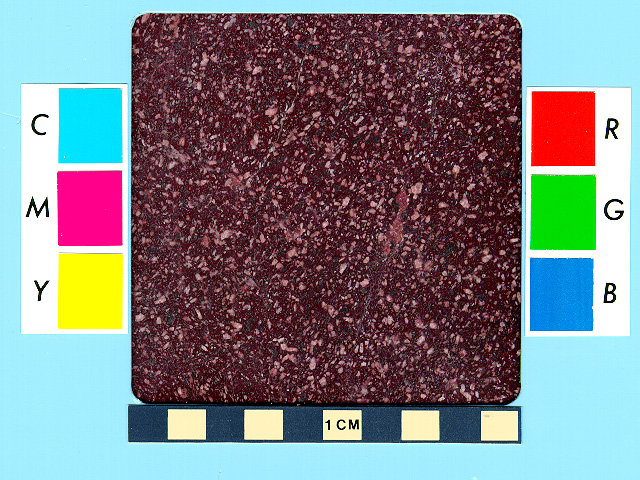
Photo for Today - Tareq, Mons Porphyrites


Tareq, Mons Porphyrites

The Eastern Desert was used as a resource for raw materials
throughout late Predynastic and Dynastic Egypt.

The Eastern Desert was a resource
for stones and minerals and a through-route for traffic moving
between the Red Sea coast and the Nile.

This site was built by Roman occupants of Egypt
for the extraction of a stone type called porphyry
which is remarkable for its white flecks of feldspar and quartz.

The remarkable thing about the stone
from this particular site is that the stone was a purple shade with white flecks
and is the only known source of the stone.

The purple porphyry from here was sent to Rome for
elaborate building projects including the
delivery room of the palace in Constantinople which was paneled with porphyry.
Children born to the reigning monarch were known as "porphyrogenitos"
i.e. "born-in-the-purple".
You can read more about the site here:
Eastern Desert Archaeology


Sunday, February 14, 2010

KV63 Dig Diary updated

KV63 2010

After four weeks, we do have some encouraging progress to report.

Our SCA conservators (Ahmed Baghdady, Mohammed Mahmoud and Zaref Basili) have recently reattached Coffin B’s facemask to the lid. The unattached mask had been strange to behold, but now that it is back in it’s proper place it presents a more favorable appearance. See ‘Photos ~ 2010’ for images of the stages of restoration of the facemask including the final result. Further removal of resin from the lid of Coffin B proved useless --- we only found unadorned wood.

We are in the process of checking the texts on the Coffin A’s fragments. Last season we uncovered inscriptions identifying the owner as a “Royal Nurse, Iny.” The glass inlays for part of the eyes and the incised inscriptions suggested a rather exemplary coffin. Gold leaf added to that opinion. In cleaning, we found an incised collar at the sides that turned inward and unites under the crossed arms. The details are sketchy due to the poor preservation, but there is definitely more gold leaf, red (ochre?) and traces of blue inlays. Chicago House artist, Sue Osgood, is adding what remains of this collar to her drawing of the coffin lid.

In addition to cleaning and illustrating the collar of Coffin A, the SCA conservators plan to do more consolidation and repair on the facemask and join sections of the lappets (side ends of wig).


There's more on the above page, and some photos on the 2010 photo page.
.
.
.

Three decades of discovery

Egypt Today (May Kaddah)

Over the last three decades, technological advancement has allowed archeologists to answer longstanding questions and refute misconceptions about missing details of Egypt’s history. From the remains of ancient rulers to Napoleon’s flagship, et takes you through some of archeology’s most significant discoveries in the last 30 years.

The discoveries described include the Giza pyramid workers' tombs, the Valley of the Golden Mummies, the search for Hatshepsut, the Theban Mapping project, KV5, the Red Monastery at Sohag, underwater archaeology in Alexandria and the restoration of Islamic Cairo.

Pharaoh's splendour online

Al Ahram Weekly (Nader Habib)

As part of development plans for modern-day Luxor, tourist services recently went online. The project implements the February 2005 cooperation protocol between the Ministry of Communications and Information Technology (MCIT) and HCLC to build the IT infrastructure needed to promote tourism in Luxor. Online services include virtual tours and a digital map of Luxor at www.luxoregypt.org, and are an effort by the government to boost and develop the tourism industry. In fact, the website has become the official gateway to tourism in Luxor.

Minister of Communications and Information Technology Tareq Kamel said that the website gives Egyptian tourism a boost by using IT tools to promote all the services available to tourists in a digital format, especially a first-time digital map which allows visitors to take a virtual tour of Luxor and provides them with e-services that enable them to easily access information about the city and its historic sites. Visitors can move around the city and visit landmark locations through interactive virtual pictures, and read detailed information about tourist sites from the comfort of their homes.

The virtual tours aim to entice visitors to travel in real time and tour the sites in person. The website also provides contact information for tourism companies in the city.

Remaking Egypt's shelves

Egypt Today (Michael Kaput)

With grand plans for a museum in every governorate, the SCA is looking to spring history from its tourist trap.

The building that houses the office in charge of the nation’s museums at the Supreme Council of Antiquities (SCA) downtown is grand but half-finished. With some work, it could be truly magnificent. Whether that work gets done anytime soon is anyone’s guess. The same could be said about the SCA’s colossal undertaking to give the country’s staggering collection of artifacts a new showcase.


Flush with ticket revenue from international exhibitions and local tourist sites, the SCA is in the midst of a project that will see 20 new museums covering every governorate, and long-closed favorites re-opening to the public over the next five years. More than just cash cows feeding on tourist dollars, however, the new museums are also hope to reconnect Egyptians with their own heritage, in their own neighborhoods.

“Ten years ago, we didn’t have any [major] museum, only the Egyptian Museum,” says Mohamed Abdel Fattah, head of the SCA’s Museum Sector.

Indeed, the nation’s most famous museum is also its most infamous, with many visitors complaining about poor lighting and labels, crowded displays and no air conditioning. Renovation projects have added new display spaces for the royal mummies, temporary exhibitions and a revamped outdoor museum in the back garden. In January, a permanent children’s museum opened on the premises. The fact remains, however, that the nation’s collection of Pharaonic artifacts alone had outgrown the Egyptian Museum almost as soon as it opened in Tahrir Square in 1902.

More re Avenue of Sphinxes, Luxor

Al Ahram Weekly (Nevine El-Aref)

The magnificent aspect of the Avenue of Sphinxes that once connected the temples of Luxor and Karnak, where priests, royalty and the pious walked in procession to celebrate the Opet festival, is being rekindled. Many of the 1,350 human-headed sphinxes with the bodies of lions that once lined the avenue have been restored.

On the annual Opet festival priests trod the paving stones from Karnak to Luxor bearing a wooden bark holding the shrine of the triad of deities: Amun-Re, Mut and Khonsu.

The 2,700-metre-long avenue of sphinxes was built during the reign of Pharaoh Nectanebo I of the 13th-Dynasty. It replaced one built formerly in the 18th Dynasty, as Queen Hatshepsut (1502-1482 BC) recorded on the walls of her red chapel in Karnak Temple. According to this, she built six chapels dedicated to the god Amun-Re on the route of the avenue during her reign, emphasising that it was long a place of religious significance.

Sadly, however, over the span of history the avenue was lost, subjected to destruction as some of its sphinxes were destroyed and those sections of the avenue that were far removed from both temples were covered with sand and were buried under random housing.

Within the framework of the Ministry of Culture programme to restore ancient Egyptian monuments with a view to developing the entire Luxor governorate into an open-air museum, a project was planned to recover the lost elements of the avenue, restore the sphinxes and return it to how it was in ancient Egypt.

Children’s Exhibit at the Cairo Museum

drhawass.com

Recently we opened the new Children’s Museum exhibit at the Egyptian Museum in Cairo. This exhibit is very good, it is for children, and contains replicas of ancient Egyptian monuments, sculptures and artefacts using LEGOS.

The purpose of this exhibit, designed by the Museum Director, Dr. Wafaa El-Saddik, is to show ancient Egyptian art and history to children in a way that appeals to them and is easy to understand. The LEGO models are shown alongside genuine ancient Egyptian artefacts. The exhibit is divided into different areas that depict different aspects of ancient Egyptian life, and also includes a workshop area where the children can use their imaginations to construct LEGO creations of their own.

This exhibition will be a permanent exhibit in the Egyptian Museum, and we hope it will continue the message of educating the children of Egypt about our heritage, and sharing it with children from around the world.

Photo for Today by Lucia Gahlin

I have been finding Lucia's photographs a real revelation. I have never been to Amarna but the feedback from most people who have visited is that there really isn't much to see, apart from the royal tombs. Lucia's photographs have shown that there is far more remaining than I had imagined. How much of it is accessible without an official guide I have no idea, and without an informed guide I would imagine that much of it would make very little sense. It is great to see the remains through Lucia's eyes. There are still a couple of her Amarna photos left to post.


Animal troughs in North Palace, Amarna

Copyright Lucia Gahlin
Bloomsbury Summer School

With my thanks


Happy Valentine's Day


From an informal survey of my male friends at the local pub
I begin to worry that the age of romance is well and truly on its way out!
For those of us who enjoy the fluffy things in life
have a very happy Valentine's Day!

Andie
xx

Thursday, February 11, 2010

Luxor temple investigations

Luxor News (Jane Akshar)

With photos.

I had a great morning at Luxor temple with Mansour Boraik. There is so much excavation going on in Luxor at the moment and one of the areas under investigation but not mentioned in his talk is the 'tell' behind the Pashas House. This is the last part of medieval Luxor left when the area was cleared decades ago, because of its proximity to the Pashas House. It is very early days and I can’t mention what they have found until official publication but what I did like to see was the field school in operation. They have a number of skilled inspectors who are passing their knowledge on to the new young inspectors.